Practical hardscape strategies for North Andover yards: patios, retaining walls, fire pits, drainage, materials, permits and budgeting.
Transforming your backyard into a functional and inviting space is possible with hardscaping. Whether you’re dealing with a sloped colonial lot or a flat, modern yard in North Andover, here’s what you need to know:
Professional site assessments are crucial to avoid hidden challenges like drainage issues or permit delays. For tailored solutions, consult with experts like Oliver Enterprises to design and execute your hardscape project efficiently.

North Andover Hardscape Planning Guide: 10 Essential Steps
If your North Andover yard has a steep slope, a multi-level patio can transform that challenging terrain into a functional and visually appealing outdoor space. By building two or more paver patios at different elevations and connecting them with stone staircases, you can make the most of the natural slope while effectively managing drainage.
This design combines precise grading with carefully placed stone retaining walls. The walls stabilize the slope and create defined spaces, offering flat, sturdy surfaces perfect for furniture, grills, and foot traffic. It’s a practical solution that has delivered great results in North Andover properties.
For instance, one project in North Andover turned a steep, unusable hillside into a series of tiered paver patios. Stone staircases and retaining walls were added, and the surrounding area was regraded and reseeded to seamlessly integrate the new hardscape into the landscape. Drainage was carefully planned to ensure the design would last for years.
"The crew expertly fine graded the site to create usable lawn space, patios and stairs that mesh into the existing structures beautifully." - Andrew E., Creative Director
Materials like natural stone and tumbled pavers are ideal for this type of project, as they complement the colonial architecture often seen in North Andover homes. This approach is particularly effective for older colonial-era properties near the town center, where narrow lots, mature trees, and significant grade changes are common. A tiered design not only adds usable square footage but also preserves the character of the existing landscape without requiring large-scale excavation.
Flat yards, like those often found in newer North Andover homes, can feel a bit uninspired without the natural contours of a sloped landscape. But there’s a simple way to create depth and interest: combine patio lighting with structured planting beds. Not only does this add visual appeal, but it also makes your backyard more inviting after the sun goes down.
By placing lighting along the edges of your patio and surrounding it with low-maintenance planting beds, you can transform a flat yard. The lights bring out the textures of both the patio and the plants, while the greenery softens the transition between the hardscape and the lawn. This pairing gives the space a sense of dimension that flat terrain often lacks, making it both practical and visually appealing.
For the best results, coordinate the lighting and planting choices carefully. Install fixtures to highlight specific plants, whether you prefer drought-resistant shrubs or neatly arranged beds that replace older, overgrown foundation plantings.
"At Oliver Enterprises, we blend artistry, innovation, and sustainability to shape outdoor spaces that feel timeless."
This design doesn’t just look good - it improves property value, enhances curb appeal, and extends the usability of your outdoor space into the evening. The result? A backyard that’s perfect for relaxing during the day and entertaining under the stars.
Bluestone or tumbled paver fire pits create inviting gathering spots in North Andover, perfect for all seasons. A circular surround, 5–7 feet in diameter, with a gravel or pea stone edge ensures proper drainage - a must for handling New England’s heavy spring rains and snowmelt.
For sloped, colonial-era lots near the town center, positioning the fire pit mid-slope with modest retaining walls helps level the area. On newer, flatter lots toward the outskirts, centering the fire pit as a focal point surrounded by drought-tolerant plants creates a balanced, functional space. These setups can comfortably host 8–10 people without overwhelming the yard.
Using natural bluestone or tumbled concrete pavers ensures durability through freeze-thaw cycles and complements North Andover’s colonial-style homes. These materials can last over 20 years with minimal maintenance. Avoid materials prone to cracking in cold winters or those that clash with the home’s architectural style.
The cost for materials and professional installation typically ranges from $5,000 to $8,000. To save 20–30%, sequence the project by installing the hardscape first and adding plants afterward. A site assessment, costing around $300, is crucial for identifying drainage issues and confirming if permits are needed. Properties within 100 feet of wetlands often require a review by the Conservation Commission, making this step especially important for compliance.
"Their masons are highly skilled and built two extensive paver patios, two stone staircases, concrete paver pool coping, and stone retaining walls... [the project] mesh into the existing structures beautifully." - Andrew E., Creative Director
For custom fire pit installations tailored to your lot and entertaining needs, professional planning ensures the space becomes a true backyard centerpiece - not just an afterthought squeezed into extra space. Oliver Enterprises continues to deliver practical, well-designed hardscape solutions for every North Andover home.
Adding walkways and steps to a landscape not only improves accessibility but also enhances the overall design, especially for sloped properties in North Andover. Natural stone staircases paired with graded walkways can transform steep yards into practical and visually appealing spaces. For colonial-era properties, which often feature dramatic elevation changes, this approach offers both structural stability and a seamless architectural fit.
Take the 2026 project by Oliver Enterprises as an example. Their team tackled a challenging backyard with steep grades by installing two stone staircases alongside paver patios. The stone steps were paired with retaining walls, which helped stabilize the soil and redirect water flow away from the home's foundation - an essential feature for maintaining the integrity of the property. On flatter lots, simpler solutions like flagstone or bluestone walkways can elegantly connect driveways to back patios, creating smooth and timeless transitions.
Natural stone and durable pavers not only complement the colonial aesthetic but also stand up to Massachusetts' harsh winters. With proper grading, these features make navigating elevation changes safer while boosting the property's overall appeal and value.
Retaining walls can turn steep, uneven slopes into practical, level spaces perfect for lawns, patios, or gardens. In North Andover, where grade changes can be dramatic, natural stone masonry provides both stability and a classic look that pairs well with the area's colonial-style homes.
Take this example: In 2026, Oliver Enterprises tackled a backyard with a 7-foot slope stretching across 50 feet. The team installed stone retaining walls, two stone staircases, and paver patios, completely transforming what the homeowner described as a "sloping, muddy mess" into a functional and appealing outdoor area. Andrew E., Creative Director, shared:
"The crew expertly fine graded the site to create usable lawn space, patios and stairs that mesh into the existing structures beautifully".
Natural stone is a go-to choice for these projects because it blends effortlessly with New England’s natural scenery while offering long-lasting durability. When replacing older retaining walls, skilled masonry techniques ensure the new structures integrate seamlessly with existing features and improve drainage systems.
Proper drainage is critical. It prevents water from pooling behind the walls, which can lead to erosion - an issue often seen on North Andover’s sloped properties. By combining fine grading, expert excavation, and high-quality materials, these retaining walls are designed to require little maintenance over the years.
Beyond structural benefits, terracing adds functionality to a yard. It transforms steep inclines into multiple usable spaces, making the area more practical for everyday activities and entertaining.
Building outdoor kitchens in North Andover requires a solid, level foundation to support heavy grills, counters, and other appliances. Local experts often turn to concrete pavers and natural stone for these kitchen pads. These materials not only stand up to the tough Massachusetts winters but also complement the area's colonial-style homes beautifully.
The foundation's success starts with meticulous site preparation. For properties on North Andover's slopes, precise fine-grading ensures a stable, even surface. This attention to detail allows heavy appliances to sit securely and ensures the pad fits seamlessly with existing patios, walls, or steps.
Choosing the right materials plays a big role in durability and aesthetics. Natural stone and premium pavers pair well with older masonry, preserving the property's architectural charm. Plus, these materials are low-maintenance, needing only occasional cleaning. Adding a sealant later can make upkeep even easier.
Don't overlook drainage and permits. Addressing these early helps prevent water pooling, protects the masonry, and ensures compliance with local regulations.
The colonial-style homes in North Andover deserve materials that respect their historical charm while standing up to the region's tough winters. Natural stone and tumbled pavers strike a perfect balance, offering both durability and a visual connection to the area's architectural roots. These materials not only endure the freeze-thaw cycles of New England but also blend beautifully with the period details found in classic homes.
Natural stone works particularly well for retaining walls and staircases, delivering a timeless aesthetic that pairs seamlessly with older structures. When deciding between natural stone and concrete pavers, it's essential to consider both functionality and design. For larger patio projects, concrete pavers provide a cost-effective alternative while still offering a polished and long-lasting finish.
Matching materials to existing features is key to creating a cohesive design. For instance, if your property already has stone walls or brick foundations, natural stone can tie everything together. On the other hand, areas like patios or pool decks - especially those with expansive, flat surfaces - are ideal for concrete pavers. These pavers provide strength and style without the higher price tag of natural stone.
An expert eye can ensure that your materials work in harmony. As Cathie B., Creative Director, noted, "We are especially impressed with how beautiful the new wall is and how it seamlessly blends into the old wall," highlighting the importance of skilled material selection. This is especially true for properties with challenging slopes, where a combination of materials works best: natural stone for retaining walls and steps, paired with pavers for flat spaces.
From past projects, it's clear that a well-thought-out mix of natural stone and pavers enhances both the look and functionality of North Andover's hardscapes. Limiting your selection to two or three complementary materials helps maintain the integrity of your home's original style. By making thoughtful choices, you’ll create a cohesive design that’s as strong as it is beautiful.
Start with the heavy lifting - structural elements like retaining walls, grading, and drainage - before moving on to decorative touches. For example, when Oliver Enterprises worked on a North Andover property with a steep 7-foot slope over 50 feet, they tackled site grading and stone retaining walls first. Only after completing that groundwork did they add two paver patios and stone staircases.
This approach saves money and headaches in the long run. Heavy machinery can damage freshly planted areas or decorative installations, so completing structural work first avoids costly do-overs. As Cathie B. shared about her project, the team "always helped us find the most economical and aesthetically appropriate solution". By focusing on practical steps early, you ensure your property is designed and executed with care.
If you're building in phases, finalize your layout during the planning stage. This ensures elements like retaining walls are positioned to support future features, such as an outdoor kitchen or fire pit. Early planning also helps avoid design conflicts and keeps the project moving smoothly. For instance, resolving drainage issues in the first phase is critical - waiting until after you've installed a finished patio could lead to water damage and costly repairs later.
Proper grading and drainage lay the groundwork for everything else, protecting your investment and setting your project up for success.
Proper water management is a must for any hardscape project in North Andover. Whether your property has steep slopes, heavy clay soil, or mature trees, starting with a professional site assessment is key. This step ensures that water flow is mapped out, allowing for fine grading to turn problematic areas into stable, functional spaces. Getting this right lays the groundwork for the rest of your backyard design.
The terrain in North Andover varies widely, from steep, historic lots to modern, flatter properties. Because of this, drainage solutions need to be tailored to each site. A professional evaluation can help pinpoint potential trouble spots early, protecting your hardscape investment from future water damage.
When it comes to masonry work or larger site projects, local permits are typically required. Massachusetts regulations govern most structural additions, so it's smart to include permit checks in your drainage planning process. Consulting professionals during the early stages can help you figure out exactly which permits your project will need, avoiding delays later on.
Ignoring drainage can lead to serious problems, like water pooling that weakens pavers, erodes retaining walls, and harms landscaping. By addressing drainage and permits from the start, you set the stage for a hardscape that’s not only functional but also enhances the overall beauty of your North Andover backyard.
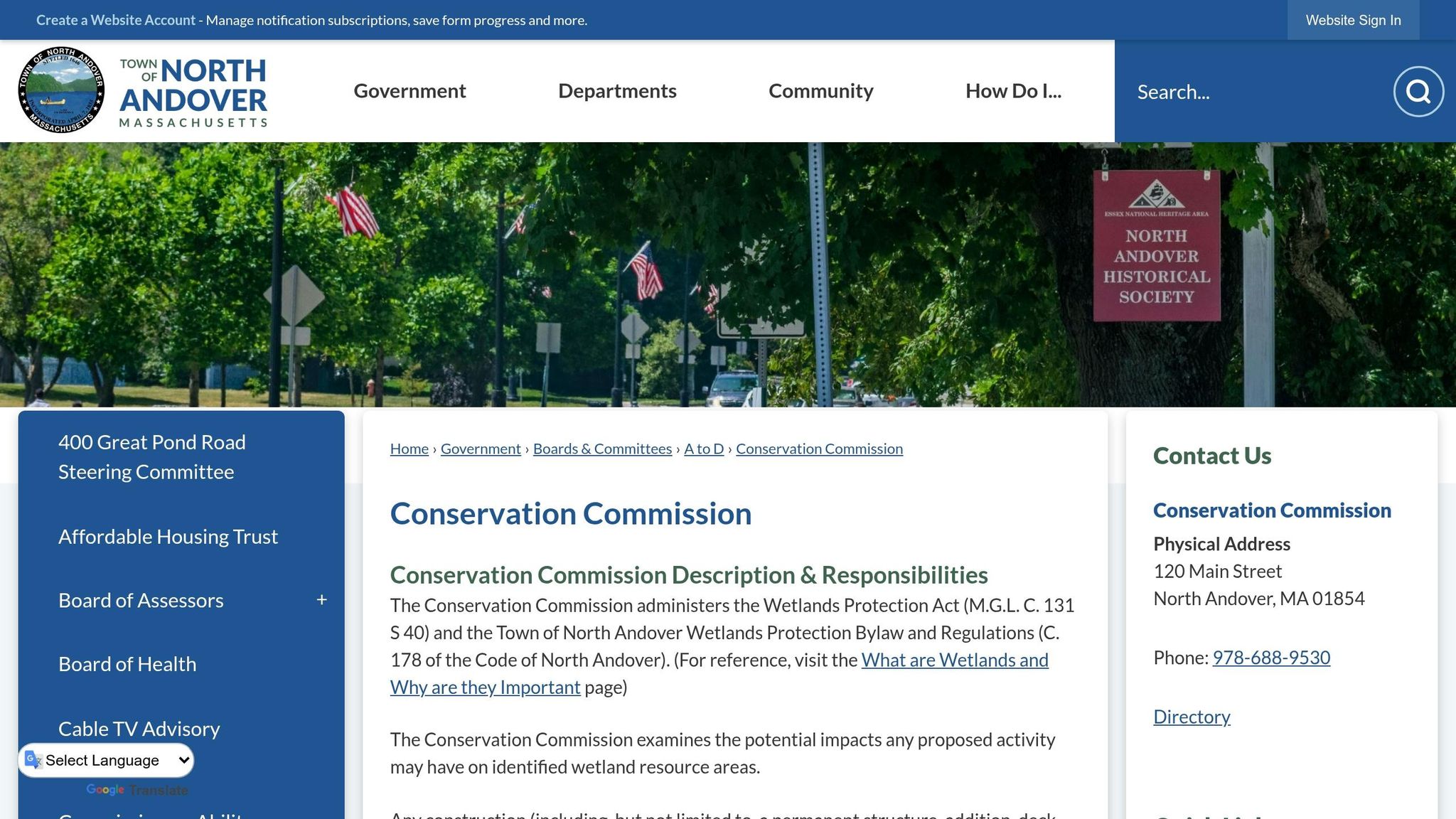
In North Andover, many properties are located within 100 feet of wetlands or streams. If your lot falls into this category, you’ll need approval from the Conservation Commission under the Massachusetts Wetlands Protection Act before starting any hardscaping. Skipping this step could lead to delays or even a complete halt to your project.
Often, homeowners only realize their property is near wetlands when they’re ready to begin construction. A professional site consultation can clarify whether special permits are needed. During this process, contractors will map out property boundaries, identify wetland areas, and explain the regulatory steps required before you can move forward. By addressing this early, you can avoid potential roadblocks and keep your project timeline intact.
The process generally includes submitting your plans to the North Andover Conservation Commission. They’ll review how your proposed hardscaping might impact local drainage, plant life, and water quality. With the right preparation and documentation, most residential projects can proceed without major interruptions.
Starting with a detailed property review not only helps you stay compliant with local rules but also saves time and money. Contractors experienced with North Andover’s regulations can handle permitting while managing sitework and drainage planning, ensuring your project stays on track from the very beginning.
Bringing together the design strategies we’ve discussed, creating successful North Andover hardscaping starts with evaluating your property - whether it’s a narrow colonial lot or a more open, modern layout.
Early planning is key to avoiding common pitfalls like neglecting drainage, overcrowding small spaces, or choosing materials that clash. If your property is near wetlands, consulting with the Conservation Commission early on can help you sidestep costly redesigns and keep your project moving forward.
Begin with the essentials - patios, retaining walls, and steps - then incorporate extras like lighting, fire pits, and planting beds as your budget allows. Establishing the structural elements first ensures your investment is protected and lets you spread costs over time.
Material selection is about more than just looks. Options like natural stone, bluestone, tumbled pavers, and brick not only complement colonial-style homes but also hold up against Massachusetts’ freeze-thaw cycles. In fact, aligning material choices with the colonial style can potentially increase resale value by 10–15%.
While this guide offers practical inspiration, a professional site assessment is crucial before starting your project. Oliver Enterprises can help evaluate your property’s drainage, grading, soil conditions, and permitting needs, ensuring you avoid hidden costs that DIY plans might overlook. For personalized advice, check out Oliver Enterprises' hardscaping services or book a consultation to explore the best hardscape options for your property, entertaining goals, and budget.
If you plan ahead - ideally in late winter or early spring - you’ll have time to secure permits and complete assessments before the summer season. A well-thought-out hardscape with proper drainage and permit compliance can provide enjoyment and durability for decades.
Retaining walls are a practical necessity for sloped yards in North Andover. They play a key role in preventing soil erosion, managing drainage effectively, and creating stable, functional outdoor spaces. Beyond their utility, retaining walls can also elevate the aesthetic appeal of your yard by seamlessly blending with features like patios, steps, or planting beds to create a unified design.
Natural stone and bluestone stand out as top choices for hardscape materials in New England winters. These materials are incredibly durable, handling freezing temperatures and heavy snow with ease. Their natural strength and resistance to cracking make them a reliable option for the region's challenging climate.
If your property in North Andover is close to wetlands or within 100 feet of a resource area, you might need approval from the Conservation Commission under the Massachusetts Wetlands Protection Act before beginning any hardscape projects. It's a good idea to have a professional site assessment done to determine if permits are necessary, particularly for properties with wetlands nearby.