Estimate Massachusetts fire pit installs: prefab $1k–$3k, masonry $5k–$15k+, gas $8k–$20k+; site prep, grading, and utilities drive costs.
A fire pit in Massachusetts can cost anywhere from a few hundred dollars to $20,000+, and the biggest price driver is usually the yard work, not the fire pit itself.
If you want a short answer, here it is: portable or prefab setups often land around $1,000 to $3,000 installed, custom wood-burning masonry projects often run $5,000 to $15,000+, and gas fire pits often start higher, at about $8,000 to $20,000+. Extra costs often come from excavation, grading, drainage, base prep, retaining walls, and gas line runs.
Before setting a budget, focus on these points:
| Fire pit type | Typical installed cost | What affects price most | Best fit for |
|---|---|---|---|
| Portable/prefab | $1,000–$3,000 | Pad prep, surface material, access | Lower-budget projects |
| Custom wood-burning masonry | $5,000–$15,000+ | Base prep, patio size, masonry, grading | Homeowners who want a built-in feature |
| Gas fire pit | $8,000–$20,000+ | Gas line run, trenching, masonry, utility work | Homeowners who want easier day-to-day use |
The main takeaway is simple: your site conditions often shape the final bill more than the fire pit model does, especially in Massachusetts yards with slope, drainage issues, or soil movement.
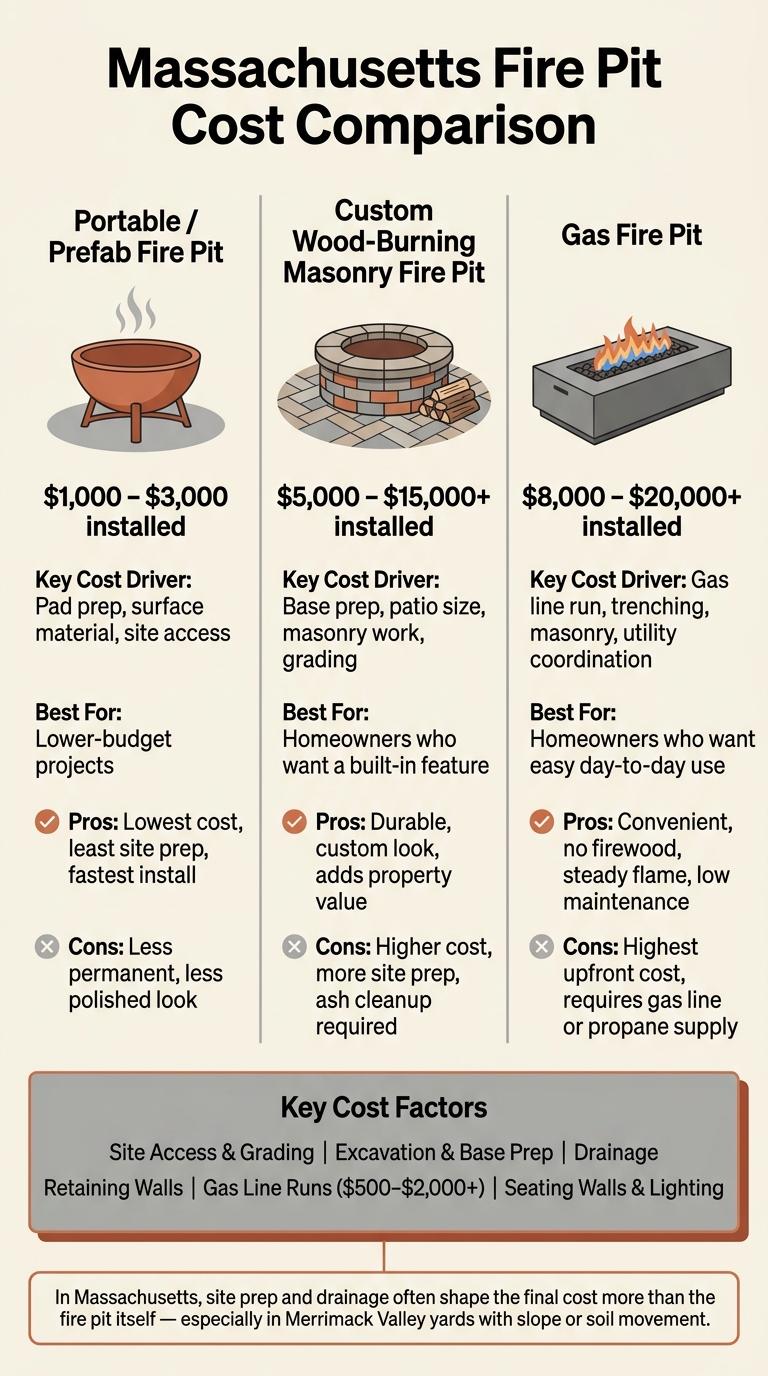
Massachusetts Fire Pit Cost Comparison: Prefab vs. Masonry vs. Gas
The type of fire pit you choose has a direct effect on price. Each one calls for a different amount of site prep, masonry, and utility work. Prefab units usually cost the least. Custom wood-burning masonry pits sit in the middle to upper end. Gas fire pits cost the most in this group.
Portable and prefab fire pits are the lowest-cost option because they need less labor and less prep than a permanent build. Installed pricing often starts at a few hundred dollars. If you add a simple gravel or paver pad under the unit, total cost can land around $1,000 to $3,000.
Once the fire pit becomes a fixed part of the yard, the price goes up. That’s because excavation, base prep, and finish materials all come into play.
A custom wood-burning fire pit is a built-in unit set on a prepared base, usually finished with a paver surround or natural stone. In Massachusetts, installed costs for this kind of project usually fall between $5,000 and $15,000 or more, based on patio size, material choice, and how much grading the site needs.
In the Merrimack Valley and North Andover areas, freeze-thaw cycles and soil movement make base prep a big deal. Proper backfill and drainage are part of the job, and that adds labor time and material cost. If the backyard slopes, you may also need a retaining wall to create a level pad. That can push the budget up before the masonry work even starts. And if you want gas service, that adds another layer of cost because it involves utility coordination.
Gas fire pits need more than the fire feature itself. They also need a dedicated gas line from the house or a propane supply, along with the right base, drainage, and utility coordination to keep the installation stable.
In the Merrimack Valley and Greater Boston area, running that utility line can add $500 to $2,000 or more to the job, depending on distance and site access. When you combine that with masonry and hardscape work, gas fire pit projects usually range from $8,000 to $20,000+. That makes gas the highest-priced option in this set.
The upside is convenience. You don’t have to store firewood, clean up ash, or fuss with starting a fire. Turn the valve, and you get a steady flame.
After you pick the type of fire pit, the next jump in price usually comes from the yard itself. In most cases, costs go up based on site prep, material choices, and utility work.
Site conditions are often where the hidden costs show up. A flat, open yard is usually simpler and less expensive to work with than one that's steep, tight, or hard to reach.
If the yard slopes, you may need a retaining wall to create a level area for the fire pit patio. That work needs to happen before the masonry and hardscaping begin, which adds more labor, more materials, and a bigger overall scope.
The base work matters just as much. The ground needs to be excavated, compacted, and drained the right way. A proper base with crushed stone, backfill, and built-in drainage helps reduce shifting, cracking, and seasonal movement over time.
Once the site is ready, the next price swing usually comes from the finish materials and added features.
As the project gets bigger, the price usually follows. Larger hardscape areas and extra features increase both labor and material costs.
A simple fire pit setup costs less because it involves fewer steps. Add seating walls, and now you're adding masonry work. Add lighting, and you're also dealing with wiring and more labor. If the project includes a larger patio, the scope grows again.
That’s often the line between a basic install and a more polished outdoor living space.
Gas and lighting add another layer of cost because they need to be tied into the build from the start. Gas lines and lighting require trenching, labor, and coordination, so it’s usually smarter to plan those runs during excavation instead of trying to add them later.
When gas, lighting, and other utility lines are coordinated with the masonry work, the project tends to stay cleaner and less disruptive.
These are the details that often separate budget, mid-range, and premium fire pit projects.
Once you know what affects price, the next step is simple: match the project to your budget and your backyard.
With those cost factors in mind, fire pit projects usually fall into three general price tiers.
Budget: A prefab or portable fire pit on a basic prepared base. This is the lowest-cost path if you want a simple fire feature without much site work.
Mid-range: A custom masonry fire pit with a small patio. This costs more because you're adding masonry work and extra hardscape around the pit.
Premium: A larger outdoor living area with custom masonry, patio work, seating walls, and lighting. This type of project looks more finished because the masonry and site work are planned as one space. Bigger yards - or sloped ones - often need more prep work too, and that can push the project into this range.
Fuel choice is the next big budget call because wood and gas differ in both upfront price and day-to-day use.
Pick wood or gas based on installation cost, upkeep, and how you plan to use the fire pit. Wood-burning fire pits usually cost less at the start, but they come with firewood, ash cleanup, and more hands-on maintenance. Gas fire pits cost more upfront because they need a gas line or propane supply, but they’re easier to use, cleaner day to day, and give you a steadier flame.
Put plainly: wood costs less to install, while gas costs more upfront but asks less from you later. That tradeoff often decides which setup makes sense for the property, the budget, and how often the fire pit will actually get used.
Bottom line: the fire pit itself is just one piece of the total price. In Massachusetts, and especially in Merrimack Valley yards, site prep and drainage often shape the final cost more than the fire pit does.
Once site work is on the table, fuel choice usually becomes the next big pricing call. Wood and gas are still the main tradeoff: lower upfront cost on one side, more convenience on the other. The better fit comes down to how often you plan to use the space and how much upkeep you're willing to take on.
Before you lock in a budget, step back and think about the bigger picture. How do you want to use the space? What limits does your site have? Which materials and add-ons match your goals? In most cases, those answers matter more than any one line item.
For Merrimack Valley and Greater Boston yards, it helps to review scope, site conditions, and materials early so your budget starts in the right place. Oliver Enterprises offers complimentary estimates for residential projects in North Andover, MA, and nearby communities.
Yes, you may need a permit for a fire pit in Massachusetts, especially for a permanent installation.
In North Andover and nearby towns, permanent fire features, especially ones connected to gas lines, often need a building permit. If your project is within 100 feet of a wetland resource area, you may also need extra approval.
Local rules, permit steps, and setback requirements can change from one town to the next. So while planning the project, confirm the permit details with your contractor.
A retaining wall can push fire pit costs up fast, especially on sloped yards that need grading and added support. For a standard setup, expect to pay $20 to $50 per square foot. If the slope is steeper or the wall needs engineering, costs can climb to $16,940 to $24,750.
Materials matter too. Natural stone is often one of the pricier options and can cost up to $90 per square foot.
A few other cost drivers often show up during planning:
Those extra pieces can add a decent amount to the total, particularly if the yard needs more than just a simple wall.
Yes - if convenience and long-term use matter to you.
Gas fire pits usually cost more at the start because they need professional installation. That often includes gas-line trenching and local permits.
What do you get in return? Instant ignition, no ash cleanup, and steady heat control. It’s a simpler, cleaner setup day to day.
Wood-burning pits are cheaper to install upfront, but they ask more from you over time. You’ll deal with more upkeep and more hands-on work every time you use them.