Outdoor fireplace guide for Massachusetts: materials, wood vs gas, placement, freeze-thaw durability, permits, and seasonal maintenance tips
A Massachusetts outdoor fireplace should be built for cold weather, code rules, and daily use - not just looks.
If you’re choosing one for your backyard, the main things to check are material style, wood vs. gas, patio placement, freeze-thaw durability, and permit needs. In places like Andover, North Andover, and Reading, winter weather can push below 32°F, and repeated freeze-thaw cycles can damage weak masonry over time.
Here’s the short answer:
| Area | Main Choices or Issues | What to watch for |
|---|---|---|
| Structure | Fireplace vs. fire pit | Fireplaces need footings, chimney, and flue planning |
| Finish | Stone, brick, stucco | Some finishes handle freeze-thaw weather better than others |
| Fuel | Wood-burning or gas | Wood needs cleanup and storage; gas needs line planning |
| Layout | Edge placement, near lounge/dining, near kitchen | Keep walkways open and smoke away from seating |
| Weather wear | Footings, drainage, chimney shell, mortar | Water entry and winter freeze damage can shorten lifespan |
| Code | Building permit, gas permit, clearances | Local town rules can change by municipality |
This guide breaks down those choices in plain language so your backyard fireplace fits your space, your budget, and Massachusetts weather.
An outdoor fireplace is a chimneyed masonry structure. A fire pit is a low, open-air feature. That difference isn't minor - it shapes everything from structural load and smoke movement to permit needs.
Outdoor fireplaces are tall and heavy, so they need footings sized for both the load and local frost movement. That helps lower the risk of settling over time. If the base shifts, mortar joints can crack, and the chimney can run into flue problems.
The flue and draft design matter just as much. A fireplace needs the right chimney height and flue size so smoke moves up and out instead of blowing back into the seating area. Fire pits work in a different way. They sit lower, stay open to the air, and don't depend on a chimney or flue. That one structural gap leads to very different design choices.
Here’s a quick side-by-side view:
| Feature | Outdoor Fireplace | Fire Pit |
|---|---|---|
| Structure | Chimneyed masonry structure | Low-profile, open-air feature |
| Engineering | Engineered footings and draft planning | Simpler structural requirements |
| Smoke Control | Smoke directed through the chimney | Open-air dispersal |
| Permits | More likely to require local review for a permanent structure | Usually simpler, but local rules still apply |
This article focuses on outdoor fireplaces. For lower-profile fire features, see the separate fire pit guide.
Once you know the difference in structure, the next step is simple: match the fireplace to your yard and how you'll use it.
A site visit should set the scope early. The fireplace needs to fit the patio, leave enough space for seating, and keep walkways open. In many cases, placing it closer to the home makes day-to-day use easier and keeps the layout sensible.
If your backyard will also include a cooking area, plan both features at the same time. An outdoor fireplace pairs well with an outdoor kitchen when the layout is worked out from the start.
An outdoor fireplace is a taller masonry feature with a chimney, so the base work is more involved than it is for a fire pit. That usually means proper footings, grading, and drainage. If the fireplace is part of a larger hardscape plan, nearby features like retaining walls or decks should be part of that same planning process.
Once the layout is in place, local approvals are the next checkpoint. Permit rules vary by municipality in Massachusetts, so it's smart to confirm local approvals before you lock in the design.
Once the layout is set and permits are handled, the next call is the fireplace finish. In most cases, that comes down to natural stone, brick, or stucco.
The next call is fuel type. After style, this choice shapes how the fireplace feels day to day and how much work it takes to keep it in good shape. In Massachusetts, most homeowners pick between wood-burning and gas, usually natural gas or propane.
Wood-Burning Masonry gives you the classic fire experience. You get the sound, the smell, and that old-school look that works well with stone or brick. The trade-off is upkeep. You’ll need a place to store firewood, and the chimney needs routine cleaning. It’s a good fit for homeowners who want a true wood fire, not just the look of one.
Gas Fireplace Insert is simpler to use. It starts right away and leaves behind less ash and soot. It works well in built-in masonry fireplaces and in larger hardscape setups, like outdoor kitchens. One smart move: install the gas line during sitework and masonry so you don’t have to cut into finished hardscaping later.
Fuel type also plays a part in maintenance and how well the fireplace holds up over time.
Layout matters just as much as appearance. The fireplace should work with seating, foot traffic, and sightlines without making the patio feel cramped.
Place the fireplace at the patio edge to anchor the seating area. This gives the space a clear focal point and helps define where people gather. Built-in masonry seat walls can also be worked into the design, which adds permanent seating without crowding the patio.
Another option is to place the fireplace near dining and lounge areas. That way, it adds warmth where people spend time without forcing guests to walk around it or cutting across the main traffic path.
If the plan combines cooking and lounging into one entertaining area, the fireplace can sit beside an outdoor kitchen. In that setup, it helps tie the whole zone together. Gas lines and surface transitions should be planned during the masonry work, not after.
Placement also affects wind exposure and long-term wear in Massachusetts.
No matter which layout you choose, keep the main circulation path clear. A fireplace that blocks the route from the back door to the yard gets in the way of daily use.
In Massachusetts, durability matters just as much as looks. Freeze-thaw cycles can wear down masonry fast. Temperatures drop below freezing, moisture slips into tiny gaps, and each repeat cycle makes those cracks a little bigger. That means the materials you choose - and the way the fireplace is built from day one - have a big effect on how long it lasts.
Those same weather stresses make chimney and mortar joints the next durability concern.
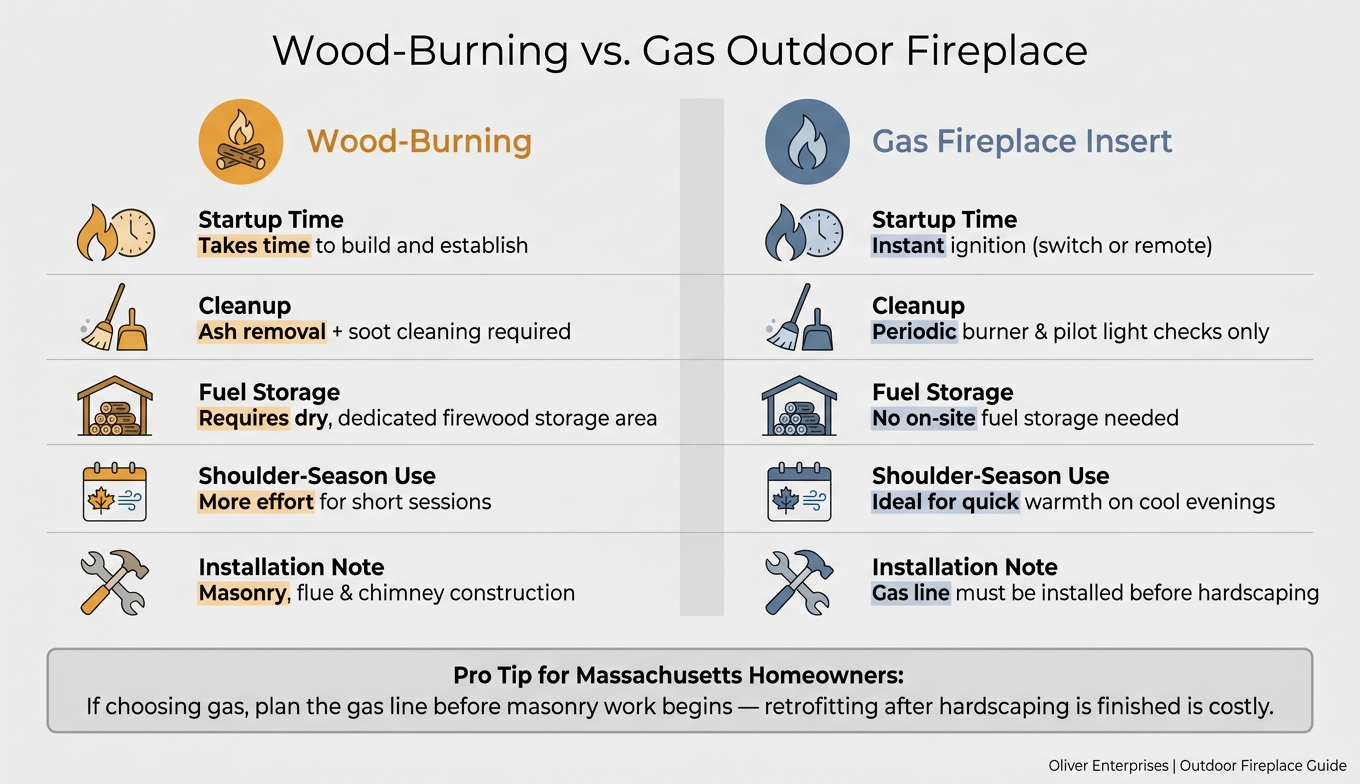
Wood-Burning vs. Gas Outdoor Fireplace: Massachusetts Comparison Guide
Once the style and layout are locked in, the fuel type shapes how the fireplace feels to use every day. And this is where the choice gets very practical. Both wood-burning setups and gas fireplace insert designs come with clear trade-offs.
Wood-burning gives you the classic fire experience: crackling logs, that wood-smoke scent, and strong radiant heat. It also asks more from you. You need time to build and establish the fire, then deal with ash removal and soot cleaning later. You’ll also need a dry spot to store seasoned firewood, which can affect your yard plan.
Gas fireplace inserts are much simpler to use. You get instant ignition, adjustable flame, and no ash to clean up. In Massachusetts, that can make a big difference during the shoulder seasons, when you just want a little warmth for a cool evening without the work of starting a full wood fire.
| Feature | Wood-Burning | Gas Fireplace Insert |
|---|---|---|
| Startup time | Takes time to build and establish | Instant (switch or remote) |
| Cleanup | Ash removal and soot cleaning | Periodic burner and pilot light checks |
| Fuel storage | Dry, dedicated firewood area | No on-site storage needed |
| Shoulder-season use | More effort for short sessions | Ideal for quick warmth |
| Installation | Masonry, flue, chimney construction | Gas line installed before hardscaping |
If you go with a gas fireplace insert, plan the gas line before the masonry work starts. Doing it later, after the hardscape is finished, often means tearing up the area around it. That’s an expensive problem and one that early coordination can prevent.
Fuel choice also shapes long-term maintenance, especially in freeze-thaw weather.
After you pick a style, the next step is simple: how well will that finish hold up in Massachusetts weather? Freeze-thaw cycles put the most stress on an outdoor fireplace’s shell, joints, and chimney.
Your material choice has a big effect on long-term durability. Natural stone tends to hold up best in freeze-thaw weather when it’s selected well and installed the right way. Brick also does well, especially when exterior-grade units and sound mortar are used, but it needs regular checks of the mortar joints and repointing over time. Stucco-finished masonry has a clean look, but it’s more at risk when moisture gets into the finish coat, so it may need more frequent sealing and repair of hairline cracks.
| Material | Freeze-Thaw Performance | Maintenance Needs |
|---|---|---|
| Natural Stone | High; naturally resistant to moisture and temperature fluctuations | Low maintenance; requires expert masonry for proper fit and stability |
| Brick | Good when exterior-grade units are used | Periodic mortar joint inspection and repointing needed |
| Stucco-Finished | Variable; susceptible to cracking if moisture gets behind the finish | More frequent sealing and repair of hairline cracks |
One thing matters across all three: the mortar joints. Exterior masonry should be built so those joints can be watched and maintained over time, since repointing worn joints is often part of preserving the chimney in Massachusetts weather. And because the chimney stays exposed all year, those joints need regular inspection and repointing when wear starts to show.
In plain terms, chimney joint care is the main long-term maintenance job.
Once the fireplace shell is in place, maintenance starts with the parts that deal with the most weather.
The chimney takes the biggest beating on an outdoor fireplace. That means routine care should focus on the mortar joints, crown, cap, spark arrestor, and drainage. Check the chimney crown, cap, and spark arrestor during routine maintenance. If you spot cracks or shifting, water can get in fast, and that’s usually a sign repairs are due. Good grading also matters because it helps keep water from pooling at the base.
Use brick and mortar made to hold up to years of weather exposure.
A simple maintenance schedule usually looks like this:
After the masonry details are handled, permit and code requirements come next.
Once you've picked the materials and settled on the layout, the next step is code review. For permanent outdoor fireplaces in Massachusetts, that usually means a building-permit review. Local officials may also check chimney and flue details as part of that process, so it's smart to handle code review before the design is locked in.
If you're adding a gas insert, there's another layer to deal with: a separate gas-permit review.
Footings need to match the fireplace load and extend below the local frost depth. That depth isn't one-size-fits-all, so it should be confirmed through local code and site-specific planning.
Before you file anything, the site plan should spell out a few key items:
It also helps to plan clearances from combustible materials early, not at the last minute. A site review before submission can flag issues with soil, drainage, and setbacks before they turn into permit delays.
Once you weigh style, fuel, layout, durability, and permits together, the best choice is the one that fits your yard and Massachusetts weather. A durable Massachusetts outdoor fireplace comes down to the right material, fuel, layout, and code-compliant construction.
The fireplace-versus-fire-pit decision matters early. Unlike a fire pit, an outdoor fireplace needs footings, a flue, a chimney, and permit review before a single stone goes in. Oliver Enterprises handles that permit groundwork as part of the build process on North Andover projects, not as an afterthought.
Long-term performance comes down to materials that handle freeze-thaw cycles and staying on top of mortar-joint repairs. If you're still weighing the options, review the fire pit guide before you decide.
An outdoor fireplace needs room for the structure itself and for the area around it so people can use it safely and comfortably.
Unlike a portable fire pit, an outdoor fireplace is a permanent masonry feature with a firebox, hearth, and chimney. That means it takes up more space and asks for a bit more planning. The right footprint depends on the design you choose, along with how much room you want for seating and smooth traffic flow in your yard.
In Massachusetts, the main winter maintenance job for a masonry outdoor fireplace is protecting it from the region’s 30 to 40 freeze-thaw cycles each year. That’s the big threat.
Here’s why: when water slips into mortar joints or porous stone, it can freeze, expand, and crack the masonry. Over time, that can also weaken the chimney.
Before winter sets in, inspect the chimney’s mortar joints and masonry surfaces for cracks or spots where moisture can get in. Small gaps may not look like much at first, but catching them early can help prevent much bigger structural damage later on.
Choose gas if convenience and ease of use matter most. You get instant ignition and simple flame control, without hauling firewood, building fires, or cleaning up ash.
Choose wood if you want the classic crackle, aroma, and ritual of a fire the old-school way. The best pick often comes down to your day-to-day routine and how often you plan to use the fireplace.