Massachusetts retaining and stone wall options: dry‑stack vs mortar, fieldstone, granite, bluestone, plus drainage and freeze‑thaw tips.
In Massachusetts, the best stone wall choice usually comes down to three things: the look you want, how much grade change your yard has, and how well the wall sheds water in freeze-thaw weather.
If your wall is for curb appeal, bed edging, seating, or property lines, low dry-stack fieldstone and mortared granite are common picks. If your wall needs to hold back soil, the job shifts from decorative work to retaining wall planning, where base prep, drainage, and backfill matter just as much as the stone.
Here’s the short answer:
A few fast facts help frame the choice:
| Option | Best Use | Look | Winter Handling | Common Massachusetts Fit |
|---|---|---|---|---|
| Fieldstone dry-stack | Garden borders, property lines | Rustic, irregular | Good water release through joints | Very common |
| Granite mortar-set | Entry walls, seat walls, accent walls | Clean, formal | Depends on solid base and drainage | Common |
| Bluestone accents/caps | Caps, edges, detail work | Smooth, blue-gray | Works well with proper setting | Common as an accent |
| Tiered low walls | Small slopes, layered beds | Stepped, orderly | Depends on drainage and backfill | Common on graded yards |
| Low retaining wall | Holding small grade changes | Varies by stone and build | Needs structural planning | Use when soil must be held back |
If you’re choosing between a simple stone feature and a wall that needs to manage a slope, this guide helps you sort out the style, material, and build type before the project starts.
Not every stone wall does the same thing. A garden border, a boundary wall, and a seat-height wall can all count as a stone wall idea, but they serve different purposes and call for different build styles.
| Wall Type | Primary Purpose | Typical Setting |
|---|---|---|
| Garden border / low wall | Structure, curb appeal, erosion control | Planting beds, lawn edges |
| Boundary / enclosure wall | Privacy, property definition | Property lines, outdoor rooms |
| Seating-height wall | Functional hardscaping | Patios, fire pits, outdoor kitchens |
| Tiered landscape wall | Create usable, level zones | Stepped planting beds, layered yards |
| Low retaining wall | Manage grade changes | Grade transitions |
That leads to the next question: which stone and build style will hold up best in a Massachusetts yard? In Massachusetts, freeze-thaw cycles make stone choice and build style just as important as wall shape.
Stone choice has a big impact on how a wall looks and how long it lasts. In Massachusetts yards, fieldstone, granite, and bluestone are the most common picks.
Fieldstone is the classic New England option. It has an earthy, irregular look that fits dry-stack borders and boundary walls well.
Granite is denser and more formal. That makes it a strong fit for freeze-thaw durability, clean lines, and a long service life.
Bluestone has a blue-gray, polished look that works well for caps and decorative accents. In Massachusetts winters, it needs proper setting and drainage.
The chart below keeps the differences simple.
| Material | Appearance | Typical Uses | Relative Cost (U.S.) | MA Availability | Freeze-Thaw Durability |
|---|---|---|---|---|---|
| Fieldstone | Earthy, irregular, rustic | Boundary walls, dry-stack borders | Moderate | High (local) | High (if dry-stacked) |
| Granite | Gray/salt-and-pepper, consistent | Formal accents, structural applications | High | High (regional) | Excellent (dense) |
| Bluestone | Blue-gray, layered, refined | Wall caps, patio edges | Moderate–High | High | High (requires proper setting and drainage) |
See stone samples in person before you choose. Color, texture, and edge profile can look one way on a screen and another way outside in full sun or shade.
Next comes the build style that controls the final look: dry-stack or mortar-set.
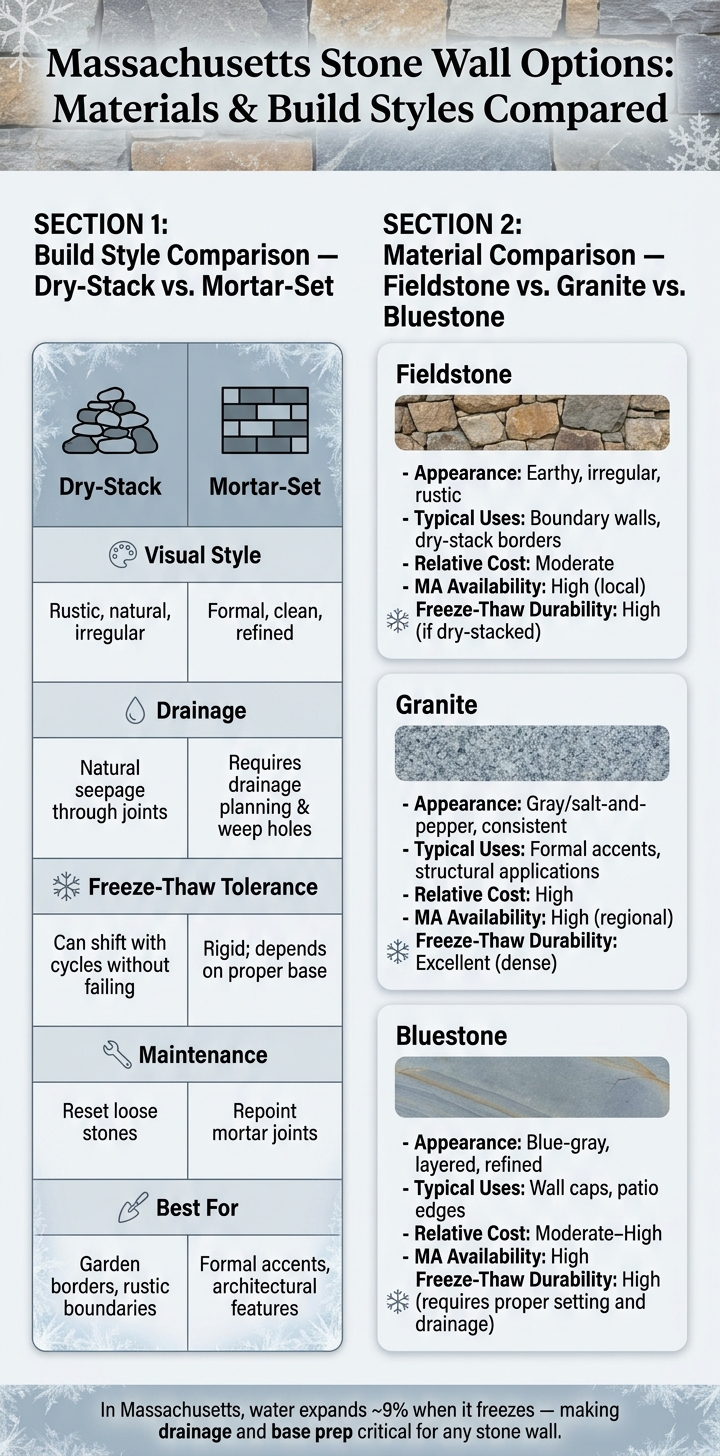
Massachusetts Stone Wall Options: Materials & Build Styles Compared
Build style shapes the wall’s look, how it handles water, and how well it holds up through Massachusetts winters. So this isn’t just a style choice. It also affects how the wall performs year after year.
A dry-stack wall uses stone with no mortar between the joints. A mortar-set wall uses masonry mortar for a more fixed, polished finish.
The biggest difference is drainage. Dry-stack walls let water pass through the joints on its own, which makes them a strong fit for garden borders and rustic boundary walls. Mortar-set walls are rigid, so formal accent walls and enclosure walls need proper backfill and weep holes to handle water pressure. In freeze-thaw conditions, a dry-stack wall can move a bit with the ground and settle back into place without failing. A mortar-set wall is less forgiving and depends on a proper base to keep mortar joints from cracking.
| Feature | Dry-Stack | Mortar-Set |
|---|---|---|
| Visual Style | Rustic, natural, irregular | Formal, clean, refined |
| Drainage | Natural seepage through joints | Requires proper drainage considerations |
| Freeze-thaw tolerance | Can shift with freeze-thaw cycles | Rigid; depends on a proper base |
| Maintenance | Reset loose stones | Repoint mortar joints |
| Best For | Garden borders, rustic boundaries | Formal accents, polished architectural features |
If you want a low garden border or a more rustic edge, go with dry-stack. If you're after a formal accent wall or crisp architectural lines, mortar-set usually makes more sense.
With the build style chosen, the next step is picking the wall style that fits the yard.
If dry-stack is the right fit for your project, these border ideas tend to work especially well in Massachusetts yards.
Rustic dry-stack borders create a clear line between lawns, patios, and garden beds. They also help keep spaces neat without looking stiff or overdone.
Here are three practical ideas to consider:
1. New England fieldstone garden edging
Rounded fieldstone from local sources, stacked by hand into a low border, gives the space that classic farmhouse feel. It also helps hold mulch and soil where they belong.
2. Stacked slate or granite walkway perimeters
Thin slate or weathered granite laid tightly along a walkway creates a clean rustic edge without mortar. This works well when you want to keep gravel or stone dust from drifting into lawn areas over time. Keep the line straight and the joints even.
3. Tiered boulder and cobble borders
If your yard has a slight grade change, larger anchor boulders paired with smaller cobbles can create a natural-looking border. In some layouts, it can even double as a low seat.
If dry-stack borders feel a bit too rustic, mortared walls give you the other end of the spectrum: clean, formal, and architectural. That’s why they work so well at entryways, patios, and other spots you want people to notice.
Here are three ideas that tend to work well in Massachusetts yards:
In Massachusetts, a solid base and good drainage details help mortared walls hold up through freeze-thaw cycles.
Boundary walls do two jobs at once: they mark where one outdoor space ends and another begins, and they add shape and style to the property. The material you choose, along with the way the wall is built, has a big effect on both appearance and lifespan. These walls make the most sense when clear definition is the main goal, with structure and design working together.
Homeowners tend to come back to three common looks:
In Massachusetts, the build details matter just as much as the stone itself. A solid base, proper backfill, and good drainage help the wall stand up to freeze-thaw cycles. And when a boundary wall also needs to deal with a change in height, low retaining versions can use the same materials while taking on a more practical job.
When a wall needs to do more than mark an edge, low tiers can shape the yard and give it a cleaner layout. The goal is simple: add structure without making the space feel boxed in. And if you like a stepped look, the same materials can work well in lower, layered layouts too.
In Massachusetts, even low walls need a solid base, proper drainage, and the right backfill to stand up to freeze-thaw cycles.
These wall styles tend to last longer when winter water has somewhere to go. Freeze-thaw damage usually starts when water gets stuck in joints, behind stones, or under the base.
A wall’s winter performance comes down to a few nuts-and-bolts details: a compacted base, proper backfill, and solid drainage. Those parts help the wall deal with seasonal ground movement and cut down the pressure that builds when moisture in the soil freezes and expands.
The way the wall is built matters too. Dry-stack walls can shift a bit without cracking, which makes them a good match for rustic borders, boundary walls, and low decorative walls. Mortar-set walls give you a cleaner look, but the joints are more rigid. If the ground moves a lot, those joints may crack. In some cases, cracking or bulging means repair or replacement. That applies whether you’re dealing with garden borders, boundary walls, or low decorative walls.
Good drainage helps stop the water buildup that leads to ice expansion and wall failure. A compacted base also helps limit settling under freeze-thaw pressure. If the wall needs to hold back soil, it’s time to shift from picking a style to planning a retaining wall.
Most walls in this article are decorative or freestanding. They mark off space, add shape, and frame planting beds or patios.
That changes when a wall needs to hold back soil or deal with a slope.
At that point, the wall shifts from decorative to structural. And that’s when retaining-wall planning is the right next step. If you’re dealing with a sloped yard, read How to Plan a Retaining Wall on a Sloped North Andover Yard.
For slope planning, use the slope-planning guide. If you’re trying to choose an installer, see the contractor guide.
The best Massachusetts stone wall choices come down to three things: looks, durability, and fit with your home's style and the state's freeze-thaw weather. For decorative and freestanding walls, the first step is usually picking the right stone and the right build style.
Once the material and build style line up with the look you want - and the weather the wall needs to handle - the best option tends to stand out. If your project calls for a structural retaining wall, move from ideas to planning with Oliver Enterprises.
The best stone wall comes down to two things: your style and your Massachusetts landscape.
If you want a timeless look that fits local architecture, natural stone such as granite or bluestone is a strong pick. Granite stands out in particular because it holds up well in Massachusetts freeze-thaw cycles.
You also have two main style options:
Either way, the wall needs the basics done right: proper drainage and a stable base. Skip those, and even good-looking stonework can run into trouble.
Yes. A properly built dry-stack stone wall can hold up through Massachusetts winters for 40 to 100 years.
That long lifespan comes down to one big advantage: flexibility. Dry-laid stone walls can shift a little as the ground moves, which helps them deal with the region’s 30 to 40 freeze-thaw cycles each year far better than rigid structures.
A few build details make a big difference here. Proper base prep, good drainage, and a slight batter all help limit frost heaving and keep the wall stable.
A stone wall needs retaining wall planning and professional engineering when it is built to hold back soil on a slope, especially if it is over 4 feet tall.
In Massachusetts, permanent hardscape structures also need to account for a 48-inch frost depth. Decorative walls are mostly about looks. But when a wall has to stabilize terrain or hold back soil pressure, it needs the right base, drainage, and structural design.