Vet North Andover stone wall contractors: verify frost‑depth footings, drainage, wall type, permits, stone choice, and a written scope.
When hiring a stone wall contractor in North Andover, focus on the parts that aren't visible: base depth, drainage, wall type, and permit knowledge. In this area, frost can reach 48 inches, and walls over 4 feet often need a permit. A wall that looks good on day one can still lean, crack, or shift after one winter if the build below grade is wrong.
The short answer: hire a contractor who knows freeze-thaw work, explains drainage in plain English, builds below the frost line, and puts every detail in writing. Photos and price matter, but they don't reveal whether the wall will last.
What to check first:
Quick comparison
| Wall type | Best use | Main risk if built wrong | What I’d ask |
|---|---|---|---|
| Dry-stacked fieldstone | Borders, garden walls, classic New England look | Bulging, stone movement | How is the base compacted, and how do the stones lock together? |
| Mortared stone | More formal look | Cracked joints, loose stones | What mortar mix is used, and how is water handled? |
| Block with stone veneer | Structural wall with stone face | Veneer separation, leaning | How is drainage handled behind the block core? |
When looking for a contractor, prioritize one with 10+ years of masonry work, local fieldstone experience, and a written scope that lists excavation depth, drainage setup, stone source, and finish details. That's usually where bad shortcuts show up first.
A wall that holds up in North Andover shouldn't be judged by the face stone alone. Judge it by what happens under the wall, behind the wall, and in the contract.
North Andover’s freeze-thaw cycles are rough on masonry. If a stone wall wasn’t built to handle that back-and-forth movement, winter will expose the problem fast.
And here’s the tricky part: the main issues usually start below grade. So while stone choice affects looks, contractor skill has a much bigger impact on whether the wall holds up.
The three most common causes of failure are all preventable.
First is base depth. Footings should extend below the 48-inch frost line required in Massachusetts. If the base is too shallow, the wall can heave as the ground freezes and then settle unevenly when it thaws. That repeated shift puts stress on the whole structure.
Second is drainage. Water trapped behind a wall adds pressure, and that pressure can lead to bulging or full structural failure. Crushed stone backfill, perforated drainage pipe, and geotextile fabric are standard ways to move water away from the wall. Skip those, and the odds of cracking, leaning, or movement go up in a hurry.
Third is mortar mix. A rigid mortar doesn’t flex much when the wall moves. It cracks, lets water in, and speeds up freeze-thaw damage.
Those same problems don’t always look the same on every wall.
| Wall Type | What to Watch For | Typical Cause |
|---|---|---|
| Dry-stacked fieldstone | Bulging or shifting stones | Poor base prep or weak interlock |
| Mortared stone | Cracked joints or popped stones | Rigid mortar failing to accommodate freeze-thaw movement |
| Concrete block with stone veneer | Veneer separation or leaning | Water trapped behind the wall |
Dry-stacked walls still need a solid base and tight stone interlock. They may not use mortar, but they’re not forgiving of sloppy prep.
Mortared walls can look more permanent. But when drainage is off, the damage often shows up in plain sight through cracked joints or stones that pop loose.
Concrete block walls with stone veneer can be even more deceptive. The face may still look fine while the bond between the stone veneer and the block core is failing behind it.
That’s why the contractor matters more than the stone itself. Next: what to look for in stone wall contractors.
Stone Wall Types in North Andover: Comparison Guide for Homeowners
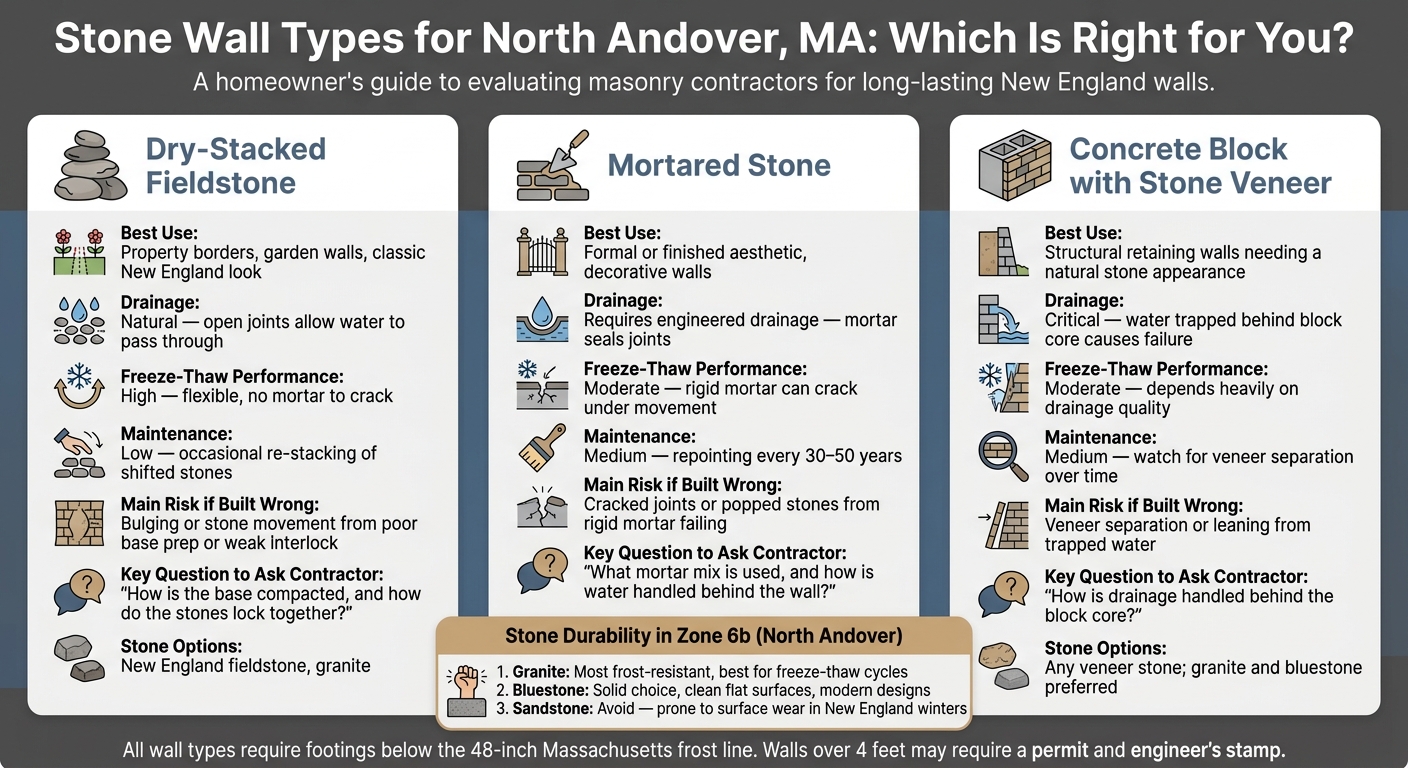
Once you know where walls tend to fail, the next step is picking a system that fits the site. In North Andover, stone walls need to deal with freeze-thaw cycles and water moving through the soil. So the best choice comes down to three things: function, drainage, and how well the wall handles winter movement.
Not all wall systems react the same way when water freezes, expands, and shifts the ground. A good contractor should walk you through the options and explain why one setup makes more sense for your wall’s job, drainage needs, and upkeep over time.
Dry-stacked fieldstone is the classic New England option. It’s the style most people picture when they think of old property lines and garden borders. These walls rely on gravity, weight, and the way the stones lock together. The open joints also let water drain out, which helps in freeze-thaw conditions.
Mortared stone has a more formal, finished look. But looks alone don’t keep a wall standing. This type works best when the base and drainage are built to handle movement. Over time, seasonal freeze-thaw stress can wear on the joints, which is why these walls may need repointing every 30 to 50 years.
Concrete block with stone veneer makes sense when you need a structural wall but still want the finished surface to look like natural stone. The block core does the heavy lifting, and the veneer gives it the stone appearance. Even then, drainage behind the wall still matters. A strong wall with poor water control is asking for trouble.
A qualified contractor shouldn’t just name these options. They should explain why one fits your site better than the others.
In Zone 6b, looks matter, but durability matters just as much. Granite is the hardest and most frost-resistant option for New England. It holds up well through repeated freeze-thaw cycles, which is a big deal in this climate.
Bluestone is also a solid pick. It has clean, flat surfaces that work well for more modern landscape designs.
Sandstone, on the other hand, is usually a weaker fit for North Andover. It’s more prone to surface wear and breakdown in this kind of weather.
When a stone wall contractor recommends materials, ask how the stone handles moisture. That shouldn’t be an afterthought. It should be part of the recommendation from the start.
New England fieldstone comes from local pastures and riverbeds, and that’s a big reason it looks so natural on properties in this area. It works well with older homes, old-style boundary walls, garden edges, and outdoor living spaces - pretty much anywhere you want that regional New England look.
When you compare contractors, look for someone who has done local fieldstone work in North Andover. That kind of experience matters. They’ll have a better feel for the right scale, the right stone sizes, and the way the wall should sit in the yard. In many cases, that local fit tells you a lot about whether a contractor gets the job or is just selling stonework.
Not every stone wall contractor builds walls that hold up over time. When a wall fails, the cause usually isn't obvious from the front. The weak points are often buried in the base, drainage, and stone layout.
Start with experience. A contractor should have hands-on work with both dry-stack and mortared stone walls. Those are not the same craft, and a crew that handles one well may not handle the other the same way. A good benchmark is at least 10 years of experience.
Ask to see past projects, not just a few nice photos. A solid portfolio should show:
It also helps to ask where the stone comes from and why that source fits the wall type and the look you want. That tells you whether the contractor is making careful material choices or just using whatever is easiest to get.
You should also confirm full liability insurance and proper licensing. That part is non-negotiable. If something goes wrong during the job, you don't want to find out too late that the paperwork wasn't in place.
A good site visit should feel like more than a fast walk-through and a rough price. This is often where you can tell whether a contractor knows the work or is just good at sales.
Once their background checks out, pay attention to what they bring up on their own. A qualified contractor should walk the site and talk through the technical side without waiting for you to prompt them. That includes excavation depth and whether the foundation will sit below the frost line - the same frost depth issue that leads to heave and uneven settling mentioned earlier.
They should also explain drainage in plain terms. That means how much drainage aggregate goes behind the wall, whether a perforated pipe belongs at the base, and where water will exit the system. If they skip drainage aggregate, pipe, or outlet points, that's a red flag.
Permit knowledge matters too. Walls over 4 feet, measured from footing to top, usually need a permit and may also need an engineer's stamp. When a contractor mentions that without being asked, it's a good sign they understand the rules that come with the build.
Before digging starts, make sure they'll call DigSafe to mark utility lines.
After the site visit, the photos should back up everything the contractor said. The details you see in a portfolio or in person are not just about looks. They tell you whether the wall was built the right way.
Check for wall batter, which is the slight backward lean into the slope. Then look at the stone interlock. Tight joints and a smart mix of stone sizes usually point to a crew that knows how to build for strength, not just appearance. Capstones should sit level and look clean at the finish.
Also pay attention to how the wall connects with nearby hardscaping. Clean transitions into adjacent hardscaping show the contractor planned the wall as part of the whole site, not as a stand-alone feature.
Once you know what tends to fail, the next step is simple: check whether the contractor follows the right order.
The job should start with a site review. That means looking at the slope, soil conditions, and drainage needs. From there, the contractor should lock in the material choice and figure out whether the wall height triggers a permit. Digging should begin only after the site plan, materials, and permit needs are clear.
Next comes the base. It should be excavated to frost depth and compacted with crushed stone. If the wall needs drainage behind it, the drainage aggregate and perforated pipe should go in before the first stone is placed. That part matters. Drainage should be built into the base, not tacked on later.
Then the stone goes in course by course, with each layer leveled before the next one starts. Dry-stack walls depend on stone fit and weight distribution. Mortared walls depend on steady, even joint work from start to finish. After that, the crew should install capstones, backfill, grade the area, and blend the wall into the surrounding landscape. A final walkthrough with the homeowner should confirm that the finished work matches the agreed scope before the crew leaves.
A proper job follows a clear path: consult, excavation, base work, stone placement, and finishing.
A solid site visit should lead to a written scope, not a rough price tossed on paper. Before signing, make sure the scope spells out the excavation depth, drainage details, and the stone type and source. If the proposal feels vague, that's often where shortcuts hide.
It also helps to confirm that the contractor has direct experience with the kind of wall you're building, whether that's dry-stack fieldstone or mortared stone. Ask for North Andover project examples with a similar slope and soil setup — a contractor like Oliver Enterprises, which has worked in the area since 1988, is the kind of reference point worth benchmarking against. That's a far better test than a general promise.
Confirm that the contractor knows when a wall crosses the 4-foot permit threshold. If they bring up permit rules before digging starts, that's usually a good sign. It shows they understand the local process and aren't making it up as they go.
Most of all, the contract should match the site plan, drainage details, and stone type discussed during the estimate. Hire only a professional hardscaping contractor who puts the base depth, drainage, and stone selection in writing.
Stone wall installation costs can swing a lot depending on the material you choose and how complex the job is. Natural stone walls, including granite or bluestone, usually cost $25 to $150+ per square foot.
For bigger or more involved masonry jobs, total project costs often land between $15,000 and $25,000+. That range can shift based on things like drainage, excavation, and structural support. Since no two sites are the same, stone wall contractors usually give custom estimates after looking at the property in person.
When stone wall contractors build with proper footings and good drainage, a stone wall can last 50 to 200 years. That kind of lifespan isn’t hype. Stone holds up well over time and stands up to moisture and erosion better than many other materials.
For masonry in North Andover, long-term performance comes down to the base. If the groundwork is done right, the wall is far less likely to shift, crack, or lean as the seasons change and freeze-thaw cycles put stress on the structure.
In North Andover, you need a building permit for any wall over 4 feet tall, measured from the bottom of the footing to the top of the wall, under MA 780 CMR.
Many stone wall contractors handle the permit process for you, which can make things easier and help the project line up with local structural and drainage rules. That said, it’s still smart to check site-specific requirements with local officials before construction.