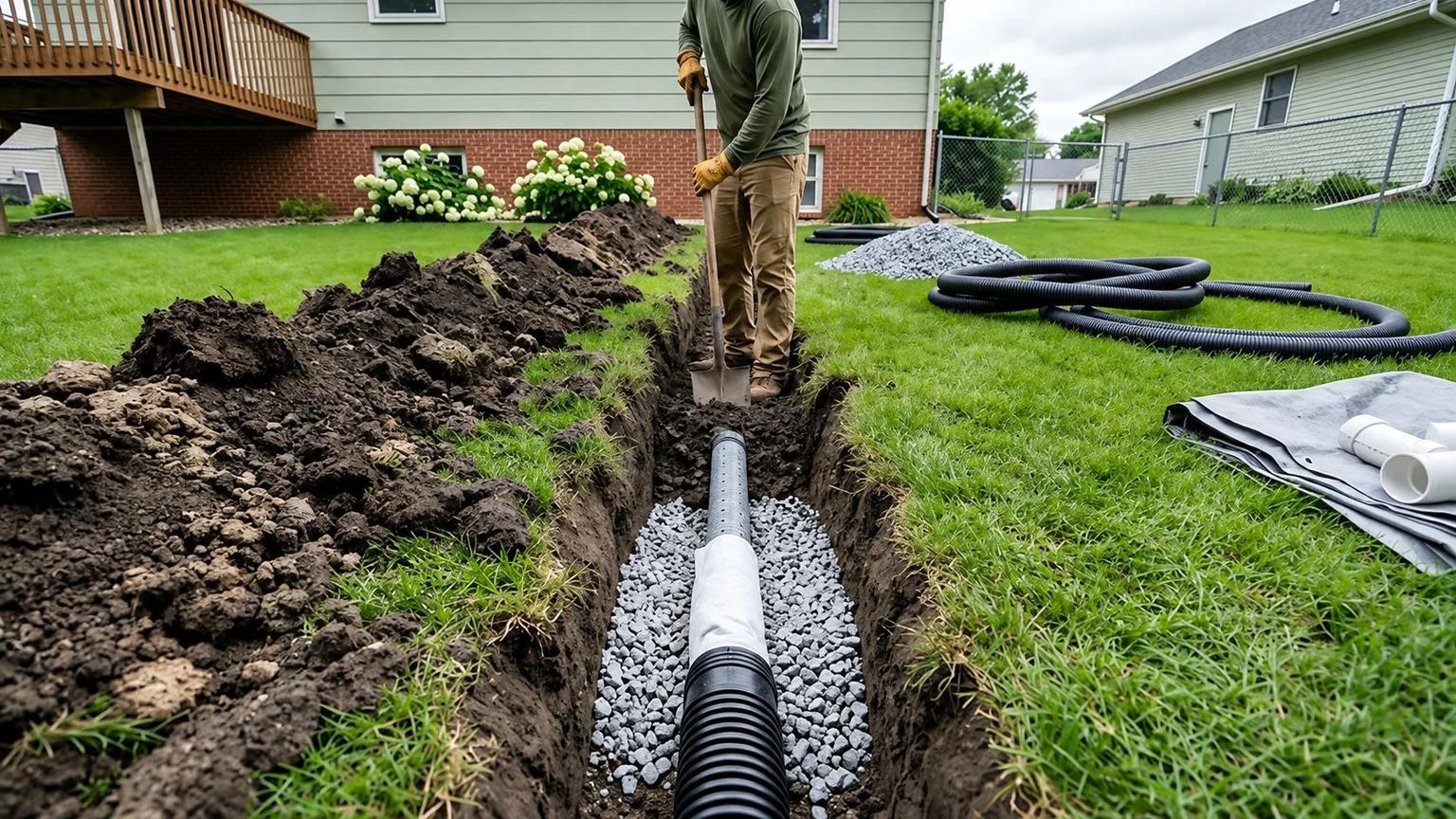
Gravel gives structural support and drainage; sand is a thin bedding for leveling pavers — guidance on depths, drainage, and frost.
For most hardscape projects, gravel is the base and sand is the setting layer. If you use sand alone under a patio, walkway, or driveway, the surface is more likely to sink, shift, or move during freeze-thaw weather.
If you want a short answer, here it is:
In places like North Andover and the Merrimack Valley, winter matters. Water expands by about 9% when it freezes, which is why weak base prep often leads to heaving and settling.
| Criteria | Gravel | Sand |
|---|---|---|
| Main job | Support | Leveling |
| Best use | Driveways, patios, walkways, wall base | Thin bedding under pavers |
| Load handling | High | Low |
| Drainage | Better | Lower if water gets trapped |
| Freeze-thaw performance | Better | Poorer when used as base |
| Typical depth | 4–6 in. for many patios/walkways; 8–12 in. for many driveways | Thin layer only |
| Wrong types to avoid | Pea gravel | Play sand, masonry sand |
Bottom line: your project usually needs both, but not in the same role. Gravel holds the load. Sand helps set the surface flat. The rest of the article explains where each layer goes, why depth matters, and what can go wrong if the materials are swapped.
Now that the base terms are clear, here’s the next piece: gravel does the heavy lifting.
Crushed gravel is the layer that carries the load. Its angular shape helps the stone lock together, and its open structure lets water move through the base instead of getting trapped. That mix of drainage and stability is what makes gravel the structural layer.
Crushed gravel is used so often for one simple reason: it compacts into a stable base. Once compacted, angular stone knits together into a dense layer that resists shifting and helps limit freeze-thaw movement.
Think of it like a pile of jagged puzzle pieces. They press into each other and stay put far better than smooth, round stone would.
Gravel is the right structural base for paver patios, front walkways, and driveways - basically any hardscape that needs to carry weight and shed water in a dependable way.
In the Merrimack Valley, snowmelt and heavy rain are common. That means water management isn't optional. A well-compacted gravel base helps keep a surface from heaving or sinking over time. Base depth should match the load and the site conditions.
Even the right gravel can fail if the installation is too shallow or drainage is poor. If the base doesn’t have enough depth, or if it isn’t built to move water out, frost movement and settlement can still happen.
That’s the key distinction: gravel provides the structure; sand finishes the surface.
Once the gravel base is compacted, sand goes on top as a thin bedding layer. That’s its lane in hardscaping. Sand is for bedding, not for structure.
Bedding sand gives pavers a smooth, even surface to rest on. It helps installers dial in the final height and finish above the gravel base.
That job is about leveling, not support. The gravel base handles the load. The sand just helps get the surface right.
Sand makes it much easier to fine-tune paver height and finish. Without it, setting a patio or walkway at a steady height would be a headache.
Trouble starts when sand is asked to do more than it should. If the bedding layer gets too thick, it can become less stable. Under pressure, the sand may shift, which can cause pavers to rock or settle.
Wet sites can make things worse. If drainage is poor, sand may wash out from under the pavers. That leaves voids, and those voids can lead to surface failure.
In the Merrimack Valley, bedding sand works only when it sits over a properly compacted gravel base. That’s what matters when the job has to handle strength, drainage, and frost resistance.
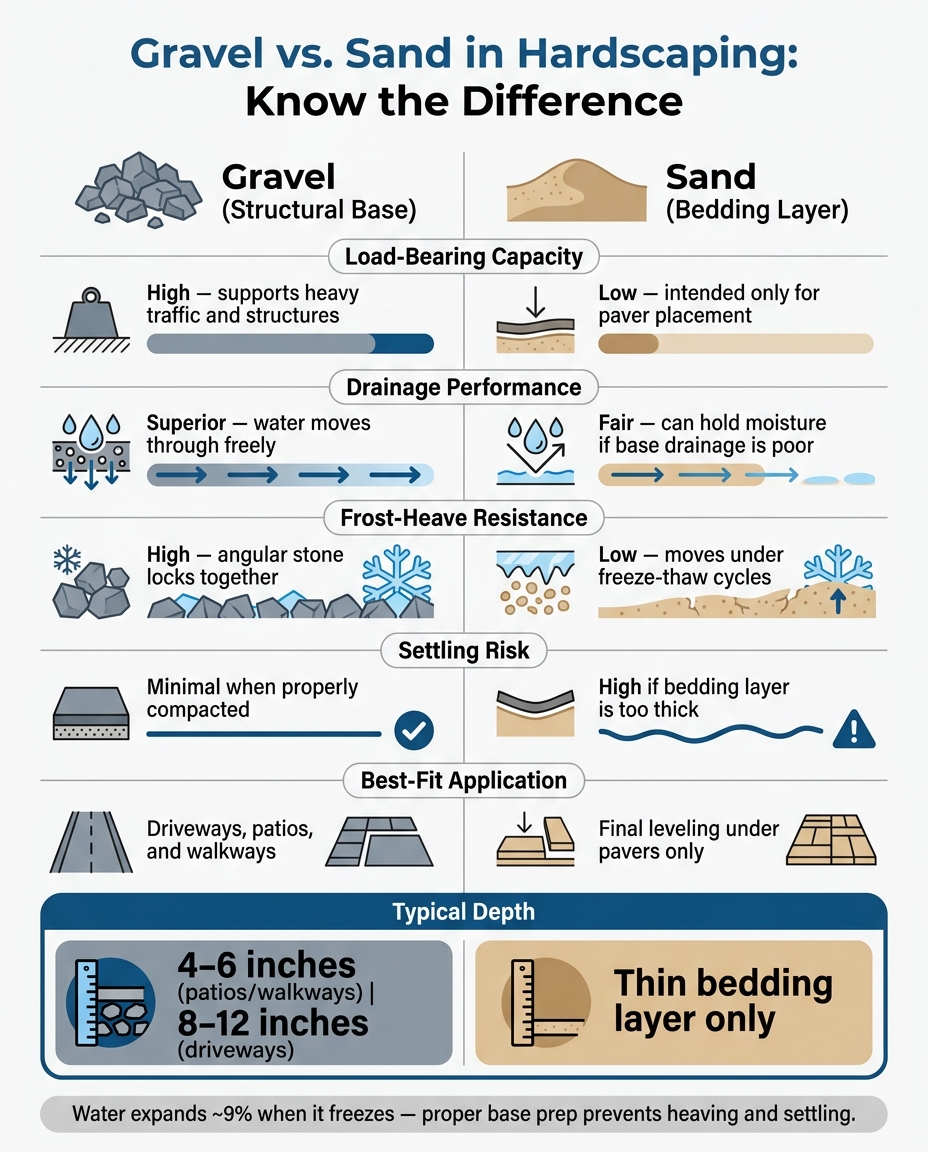
Gravel vs. Sand: Hardscape Base Comparison Chart
Gravel and sand do different jobs in a hardscape base. Gravel handles the load. Sand helps level the pavers.
That split matters even more in a freeze-thaw climate. So instead of thinking only about the material name, it helps to look at how each one performs under pressure, around water, and through winter.
| Criteria | Gravel (Structural Base) | Sand (Bedding Layer) |
|---|---|---|
| Load-Bearing Capacity | High - supports heavy traffic and structures | Low - intended only for paver placement |
| Drainage Performance | Superior - water moves through freely | Fair - can hold moisture if the base drainage is poor |
| Frost-Heave Resistance | High - angular stone locks together | Low - moves under freeze-thaw |
| Settling Risk | Minimal when properly compacted | High if the bedding layer is too thick |
| Best-Fit Application | Driveways, patios, and walkways | Final leveling under pavers |
Once those roles are clear, choosing the right setup gets a lot easier.
Choose based on load and location.
For driveways, gravel does the structural work. It needs to be compacted so it can handle vehicle weight without shifting. Sand doesn't play a structural part here.
For patios and walkways, both materials are used, but in the right order. First comes a compacted gravel base. Then a thin sand bedding layer goes on top to level the surface before the pavers are set. Sand does not replace the gravel base. It sits above it.
For retaining walls, gravel is used for the base and for drainage backfill. Skip gravel, or swap the roles of the materials, and that's when base trouble tends to start. That difference shapes how the base should be picked for each site.
Base choice comes down to three things: water, weight, and frost. If you get those right, the rest gets a lot easier. Once you know what each material does, the next move is simple: match the base to the site.
Before you order base material, check these three things:
Those details shape the base depth and drainage plan. In many local projects, compacted angular gravel handles the structure and water movement, while a thin layer of concrete sand goes on top to level the pavers.
Gravel does the heavy lifting. Sand fine-tunes the surface.
Sand by itself doesn't have the strength for a hardscape base. Gravel by itself doesn't give you the fine leveling pavers need. Used in the right order and at the right depth, they work as a team.
Oliver Enterprises sizes each hardscape base around soil, drainage, and intended use in North Andover and nearby communities.
Check for poor drainage. If water sits for more than four hours after a 1-inch rainfall, or you notice muddy spots, that’s a red flag.
In North Andover, dense, impermeable glacial till soil and frost heaves can mean you need a deeper base. You can also use the USDA Web Soil Survey to check the drainage class and restrictive layer depth. Oliver Enterprises can assess your property’s soil conditions.
For residential paver projects in North Andover, a base of 6 to 8 inches of compacted crushed aggregate works best. That depth gives your pavers the support and drainage they need, especially in the area’s fine sandy loam glacial till.
For the best outcome, install the base in 3-inch layers. Then compact each layer well with a vibratory plate compactor.
For residential paver projects in North Andover, the main thing that matters is a 6 to 8-inch base of compacted crushed aggregate, not sand.
Keep sand out of drainage layers. It can clog the system and make drainage work less well. For job-specific advice, Oliver Enterprises can help.