Compare pavers, poured concrete, bluestone, flagstone, and porcelain for North Andover's freeze-thaw winters — costs, durability, and base depth.
If you're planning a patio in North Andover, Massachusetts, the material you choose must handle 60–80 freeze-thaw cycles every winter while maintaining durability and style. Here's a quick breakdown of the most popular options:
For long-lasting results, ensure at least 8–12 inches of compacted gravel base, especially in areas with heavy clay soil. This prevents frost heave and shifting.
Your choice should balance budget, maintenance needs, and aesthetic preferences. Below, we’ll explore the pros, cons, and performance of each material in detail.
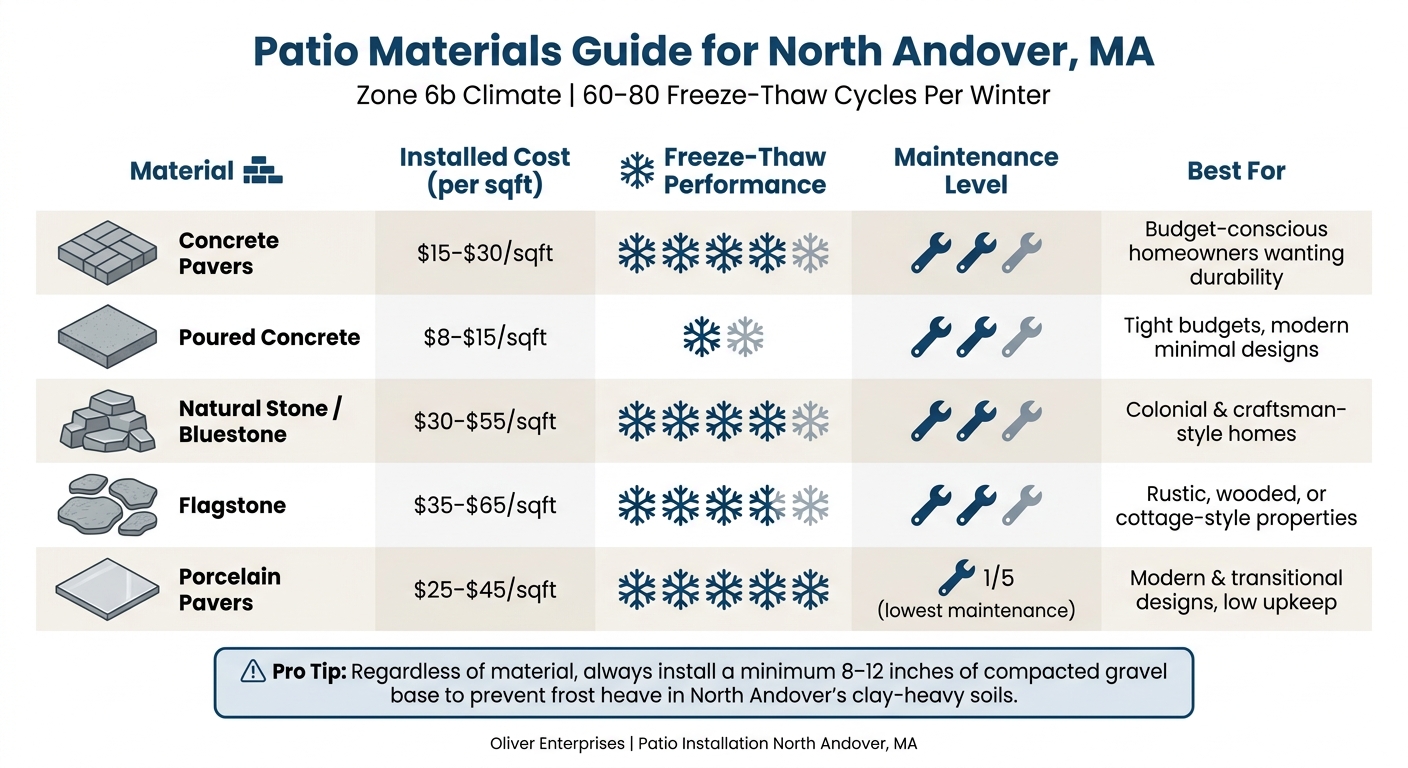
Patio Materials Comparison Guide for North Andover Homeowners
Concrete pavers are a go-to recommendation from patio contractors in North Andover, and it’s easy to see why. They strike a balance between affordability, durability, and adaptability, which makes them a practical choice for the region’s climate.
The cost of installing concrete paver patios in North Andover typically ranges from $15–$30 per square foot, with more intricate designs or premium brands reaching up to $45 per square foot. Factors like limited access to the site, heavy clay soil, or curved layouts can increase costs. For a standard 200–400 square foot patio, you’re looking at an investment of around $8,000 to $15,000 for a mid-tier project.
One standout feature of concrete pavers is their ability to handle freeze-thaw cycles. Unlike poured concrete slabs, pavers are installed on a sand-set base, allowing the surface to flex as the ground shifts during freezing and thawing. This flexibility prevents cracking.
"Concrete pavers handle freeze-thaw cycles well because they are designed to flex slightly within their sand-set joints. When one unit cracks or stains, you can pop it out and replace it individually without disturbing the rest of the patio." - Stiles & Sons
Manufacturers like Techo-Bloc, Cambridge Pavingstones, Unilock, and Genest Concrete offer pavers specifically designed for northern climates, ensuring high freeze-thaw durability. With proper installation, including a minimum 8-inch compacted gravel base (or up to 12 inches in clay soil), a paver patio in New England can last 25 to 50 years.
Concrete pavers are relatively low-maintenance. To keep them in top shape:
| Maintenance Task | Frequency | Purpose |
|---|---|---|
| Polymeric sand top-off | Every 2–3 years | Prevents weeds and keeps pavers stable |
| Power washing | Every 2–3 years | Removes stains and organic growth |
| Sealing | Every 3–8 years | Protects color and resists staining |
| Individual unit replacement | As needed | Fixes localized damage |
Efflorescence, a white mineral deposit, may appear on new installations but usually fades over time or can be removed with a mild acid wash.
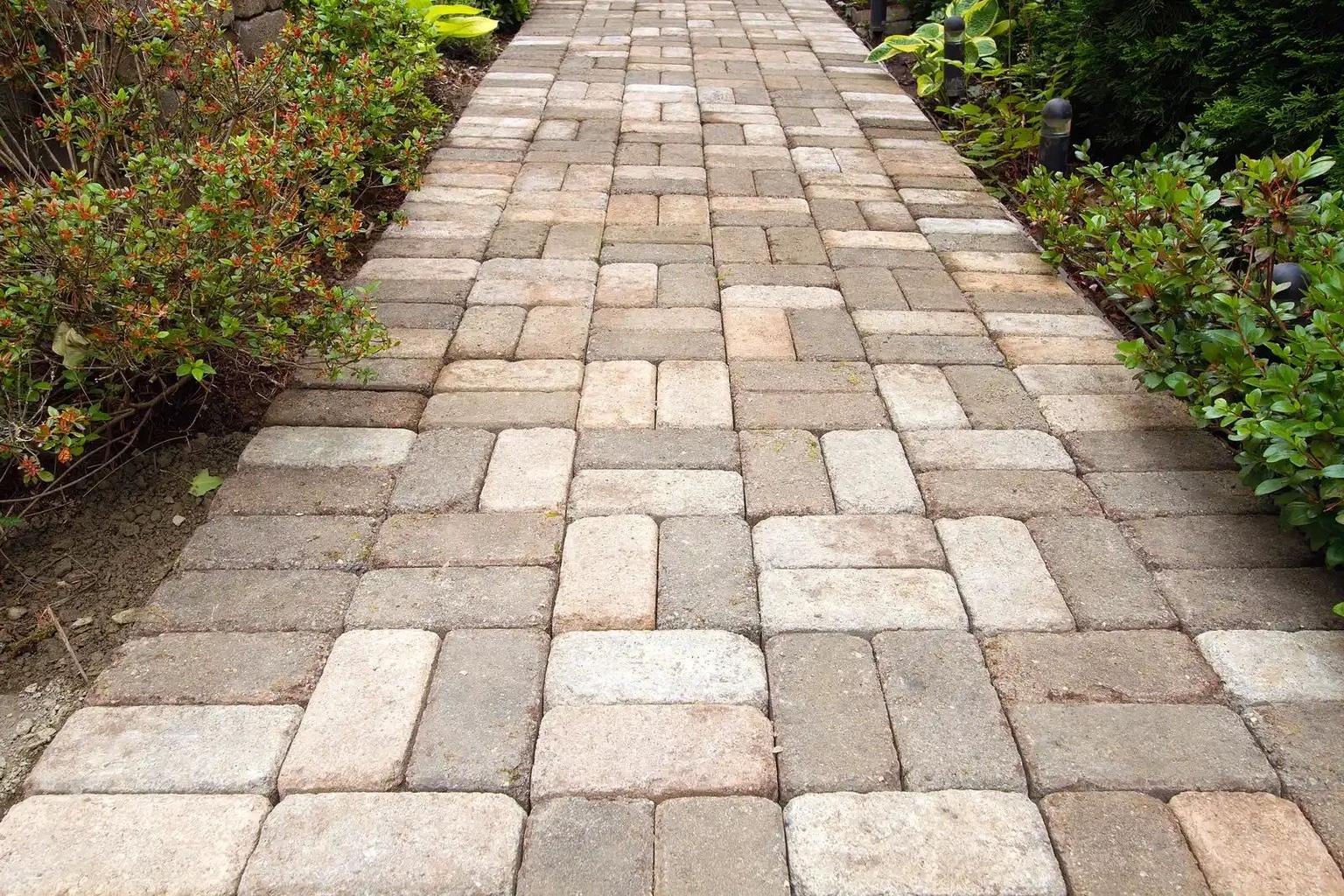
Modern concrete pavers offer versatility in design, making them a great match for the colonial and craftsman-style homes commonly found in North Andover. They can mimic materials like tumbled cobblestone, weathered wood, or slate, offering the look of natural stone without the higher price tag. For example, Techo-Bloc's Blu 60mm pavers provide realistic texture and color variation at a fraction of the cost. With a wide range of color blends, edge profiles, and patterns, homeowners can create a custom look that suits their style.
Next, let’s explore poured concrete as another option for tackling North Andover’s tough winters.
Poured concrete is a popular choice for patios in North Andover, particularly because it’s one of the most budget-friendly solid-surface options. For a standard slab, installation costs typically range from $8–$15 per square foot, while stamped or decorative finishes can cost $15–$30 per square foot. However, while the initial price is appealing, its durability in zone 6b climates leaves something to be desired.
One of poured concrete's biggest challenges in zone 6b is its struggle with freeze-thaw cycles. With Northern Massachusetts experiencing around 60 to 80 freeze-thaw cycles each winter, the material’s rigidity becomes a significant drawback. Its inability to flex with ground movement makes it prone to cracking. When water seeps into its pores or small cracks, it freezes, expands, and eventually fractures the slab.
"A poured concrete slab in New England typically cracks within 5 to 10 years." - Stiles & Sons
Even with thorough base preparation - such as an 8-inch base (or 12 inches in areas with heavy clay) - the monolithic nature of poured concrete remains susceptible to damage. Unlike pavers, which allow for individual replacements, repairing cracked concrete can be difficult and often leaves visible marks.
Routine maintenance for poured concrete is relatively straightforward. Occasional cleaning and ensuring proper drainage are usually enough to keep it in good condition. Sealing the surface every 5 to 8 years can also help reduce moisture absorption and staining. However, once cracks appear, repairs can be either highly noticeable or require extensive repouring, which undermines the cost savings of the initial installation.
Poured concrete delivers a sleek, minimalistic look that works well with modern or transitional designs. That said, its range of colors and textures is somewhat limited, even with stamped finishes. This can make it less ideal for complementing the colonial and craftsman-style homes that are common in North Andover. Additionally, stamped patterns may fade over time, especially with exposure to the elements.
Next, we’ll explore natural stone and bluestone, premium materials that offer better durability and a refined look for North Andover’s climate.
Premium natural stone and bluestone bring a classic New England charm while standing up to the challenges of zone 6b's freeze-thaw cycles. These materials naturally complement colonial and craftsman-style homes and, when installed properly, can withstand the region's demanding climate.
Natural stone falls on the higher end of the cost spectrum. Bluestone installation costs range from $30–$55 per square foot, while granite typically costs $35–$65 per square foot installed. Irregular fieldstone and flagstone also fall within this same range - $35–$65 per square foot. The labor-intensive nature of working with these materials contributes to the higher installation costs.
Both granite and bluestone are well-suited for zone 6b's 60–80 annual freeze-thaw cycles, but granite has the edge in durability. Granite is exceptionally hard and, as described by Stiles & Sons, "virtually indestructible in our climate", with excellent resistance to road salt damage. Bluestone, while slightly softer, still performs admirably. The real key to longevity for either material lies in the base preparation. In North Andover, where clay-heavy soil is common, 9–12 inches of compacted gravel is essential to prevent frost heave from disrupting the stones.
"Pennsylvania bluestone is one of the most popular patio materials in New England for good reason. It is naturally slip-resistant, handles freeze-thaw well, and develops a beautiful patina over time." - Stiles & Sons
This durability makes both materials excellent candidates, setting the groundwork for exploring other natural options like flagstone in the next section.
Natural stone requires minimal upkeep over the years. To maintain stability and prevent weeds, replenish polymeric sand in the joints every 2–3 years. Sealing is optional; many homeowners prefer the natural patina that develops over time. However, applying a light seal every few years can help preserve the stone's color and protect against staining from organic debris. With proper installation, a natural stone patio in Massachusetts can last an impressive 30–50 years.
Bluestone's blue-gray tones pair beautifully with traditional North Andover architecture. Granite, on the other hand, offers a more subdued palette of grays and salt-and-pepper shades, making it a great choice for formal or estate-style settings. For a sleek, uniform appearance, thermal bluestone (which is sawn and flame-finished) creates a contemporary look, while natural cleft or irregular cuts provide a rustic, organic feel.
Flagstone offers a distinctive, handcrafted look that sets it apart from other natural stone options like bluestone. Its irregular, free-form pattern makes it a standout choice for patios, especially in wooded lots or cottage-style landscapes.
Flagstone is a premium material, and its price reflects that. In North Andover, the installed cost typically ranges from $35–$65 per square foot, which includes both labor and materials. This higher price stems from the labor-intensive process of installation. Each uniquely shaped piece must be carefully selected, test-fitted, and often trimmed using diamond blades to ensure a proper fit. When considering flagstone for your patio, it's also crucial to account for how well the installation can handle the area's freeze-thaw cycles.
With proper installation, flagstone can withstand 60–80 freeze-thaw cycles. A dry-laid system is recommended, which involves placing the stones on a 12-inch compacted gravel base and using polymeric sand in the joints. This setup allows the stones to flex naturally, preventing damage from temperature fluctuations. For areas with clay-heavy soils, the 12-inch gravel base is especially important to reduce frost heave, prevent shifting, and provide support for thinner stones to avoid cracking.
"A material that looks great in a showroom can crack, shift, or stain within a few seasons if it is not suited to our climate." - Stiles & Sons
Flagstone is relatively low-maintenance for a premium material. Polymeric sand joints should be topped off every 2–3 years, especially since the irregular gaps between flagstone pieces can vary in size. Applying a sealant every 3–5 years can help protect against stains. If needed, individual stones can be reset or replaced without disrupting the entire patio.
Flagstone’s rustic, natural look complements North Andover's residential landscapes beautifully. Its variety in color, texture, and shape makes it ideal for properties with mature trees, natural slopes, or informal garden designs.
"Irregular natural fieldstone and flagstone create a rustic, organic look that fits perfectly in wooded or cottage-style settings." - Stiles & Sons
One of flagstone’s unique qualities is that no two patios are the same, offering a level of individuality that more uniform materials can’t match. Up next, we’ll explore porcelain pavers, a modern option with its own set of benefits tailored to North Andover’s climate.
Porcelain pavers are becoming a popular choice in North Andover, offering a sleek, modern alternative to rustic materials like flagstone.
The cost of installing porcelain pavers in North Andover typically falls between $25–$45 per square foot, including labor and materials. These prices account for the specific demands of zone 6b's freeze-thaw cycles. For intricate designs or premium selections, prices can climb past $60 per square foot. The higher price reflects both the luxurious nature of porcelain and the precision required during installation. A proper base and precise diamond-blade cuts are essential to achieve a seamless finish.
Porcelain stands out for its extremely low water absorption rate - less than 0.5%. This makes it an excellent choice for North Andover's climate, where 60–80 freeze-thaw cycles occur annually. Its resistance to water absorption helps prevent internal damage, a critical factor for long-term durability. However, even with porcelain’s resilience, proper installation is crucial. Experts recommend an excavation depth of 9–12 inches to create a stable base that minimizes frost heave in harsh winters.
"Porcelain is the rising star of high-end backyards. It is incredibly dense, meaning it absorbs almost no water and is virtually 'freeze-thaw proof.'" - Dube Property Maintenance & Hardscaping
Porcelain pavers are low-maintenance. Thanks to their non-porous surface, sealing isn’t necessary. Routine cleaning involves nothing more than a garden hose and a stiff brush. In winter, using a plastic snow shovel will help avoid scratches, and paver-safe ice melt is recommended over standard rock salt.
Porcelain pavers are ideal for homeowners looking for a clean, contemporary design. Their large-format tiles and minimal joint spacing create a polished, architectural look that complements modern and transitional styles. This blend of high-end appearance and durability makes porcelain a standout option, which will be further explored in the upcoming pros and cons analysis.
Here's a quick breakdown of different patio materials to help you choose what works best for North Andover's zone 6b climate. Each option offers specific benefits and drawbacks, so it's important to weigh upfront costs against how well the material performs over time.
| Material | Pros | Cons |
|---|---|---|
| Concrete Pavers | Flexible joints adapt well to freeze-thaw cycles; damaged pieces are easy to replace; available in a variety of colors and textures; affordable at $15–$30/sqft installed | Needs sealing every 5–8 years and polymeric sand refills every 2–3 years; colors can fade without UV-rated sealers |
| Poured Concrete | Lowest initial cost at $8–$15/sqft installed; can be stamped for decorative designs; quick to install | Prone to cracking within 5–10 years in New England; repairs are hard to disguise; rigid slabs don't handle frost heave well |
| Natural Stone / Bluestone | Performs well in freeze-thaw conditions when installed on a proper base; develops a beautiful patina over time; complements New England colonial and craftsman-style homes | Expensive, with costs ranging from $20–$40/sqft installed; irregular shapes increase labor time; honed finishes can become slippery when wet |
| Flagstone | Offers a unique, rustic look; often locally sourced; ideal for older New England properties | Labor-intensive to install due to hand-fitting; uneven surfaces may trap water; thinner pieces can crack if the base shifts during frost cycles |
| Porcelain Pavers | Extremely resistant to freeze-thaw damage with less than 0.5% water absorption; no need for sealing; UV stable and stain-resistant | The most expensive option, ranging from $25–$45/sqft installed, with premium selections exceeding $60/sqft; requires a perfectly leveled, well-drained base and skilled installation |
This table highlights the trade-offs between cost, durability, and maintenance requirements, making it easier to choose the right material for your needs.
Regardless of the surface material, the base is the most crucial factor for a long-lasting patio. In zone 6b, you'll need at least 8 inches of compacted gravel - and up to 12 inches if your soil is heavy clay or poorly drained. A strong, well-drained base ensures stability and prevents shifting over time.
"The single most important factor in patio longevity is not the surface material but the base underneath it." - Stiles & Sons
Interlocking materials like pavers and natural stone tend to hold up better than poured concrete in this region. Poured concrete often cracks within 5–10 years and is tough to repair without leaving visible seams. Even with premium materials, a properly prepared base is essential to ensure durability.
Choosing the right patio material comes down to finding the perfect mix of budget, upkeep, and style. Here’s a quick rundown: concrete pavers offer a great blend of affordability and durability, Pennsylvania bluestone brings timeless New England charm, porcelain pavers excel in freeze-thaw climates with minimal maintenance, poured concrete works for tighter budgets but needs more upkeep, and flagstone delivers a rustic, handcrafted appeal.
No matter the material, a solid base is key. For most patios, this means at least 8 inches of properly compacted base material - possibly more if you’re dealing with heavy clay soil.
A professional patio contractor in North Andover can evaluate your lot’s conditions, soil, and drainage to ensure your patio lasts for years. At Oliver Enterprises, the team collaborates closely with homeowners to compare materials, assess the site, and create a plan that fits your budget and the local climate. From base preparation to the final touches, every detail is carefully managed during your patio installation in North Andover.
Reach out to your local patio contractor in North Andover today for a free estimate.
In North Andover’s Zone 6b climate, choosing the right patio materials is essential to ensure they withstand the region’s weather conditions. Some of the most reliable options include natural stone (like granite and bluestone), interlocking concrete pavers, and porcelain pavers.
Granite and porcelain stand out because of their low porosity, which makes them highly resistant to freeze-thaw cycles - a common issue in colder climates. Unlike poured concrete, these modular materials are also better equipped to handle ground movement, reducing the likelihood of cracks or damage over time.
No matter which material you choose, proper installation is key. This means starting with a compacted, well-drained gravel base to provide stability and prevent water-related issues. By focusing on both material quality and installation techniques, you can create a patio that lasts for years in this challenging climate.
A 12-inch gravel base is ideal for yards with heavy clay soil or poor drainage. In North Andover, where there are 60–80 freeze-thaw cycles each year, a well-compacted, deep foundation is crucial. This helps prevent ground heaving, which can cause significant damage to patios over time. A knowledgeable patio contractor in North Andover will assess your yard to decide if this depth is required for lasting stability and durability.
If you live in a zone 6b climate, safeguarding your patio from harsh winters is key. Start by choosing salt-resistant materials such as concrete pavers, granite, or bluestone. These materials are better equipped to handle the freeze-thaw cycles common in this climate.
When it comes to de-icing, opt for products specifically labeled as safe for concrete and masonry. Using the wrong de-icer can lead to spalling or surface damage, which can shorten the life of your patio. To be on the safe side, always refer to the manufacturer’s guidelines for your pavers. Some premium paver options come with specific salt-resistance ratings, which dictate the types of de-icers you can use without causing harm.
For the best results, it’s a good idea to consult with a local patio contractor in North Andover. They can provide tailored advice based on your patio’s materials and the specific challenges of your environment.