Compare LEDs, recessed stair lights, string and solar options for Massachusetts decks—winter performance, placement, and installed cost.
For a Massachusetts deck, pair wired low-voltage LEDs with landscape lighting for steps and edges to keep the surface safe and usable after dark. Use post-cap and railing lights around deck edges, direct stair lights onto each tread, and add soft light where you sit or eat.
Your four main options serve different jobs:
Choose wet-location fixtures rated for freezing temperatures, keep glare out of your sightline, and protect wiring from shovels and salt. Compare installed costs, not just fixture prices, including electrical work, power use, maintenance, battery replacements, and Massachusetts deck permit requirements. Lighting helps you spot ice; snow removal and traction treatment still matter.
Quick Comparison
| Option | Best use | Winter performance | Installation and cost |
|---|---|---|---|
| Wired post-cap and railing LEDs | Edges and ambient light | Steady output | Wiring adds upfront cost |
| Recessed stair lights | Steps and landings | Keep water from pooling | Best planned during construction |
| String lights | Seating and dining ambiance | Depends on ratings and supports | Include mounting and electrical work |
| Solar lights | Accents and markers | Reduced charging and battery output | Little setup; budget for batteries |
Match each light to its job, then check placement, weather ratings, and total cost before buying.
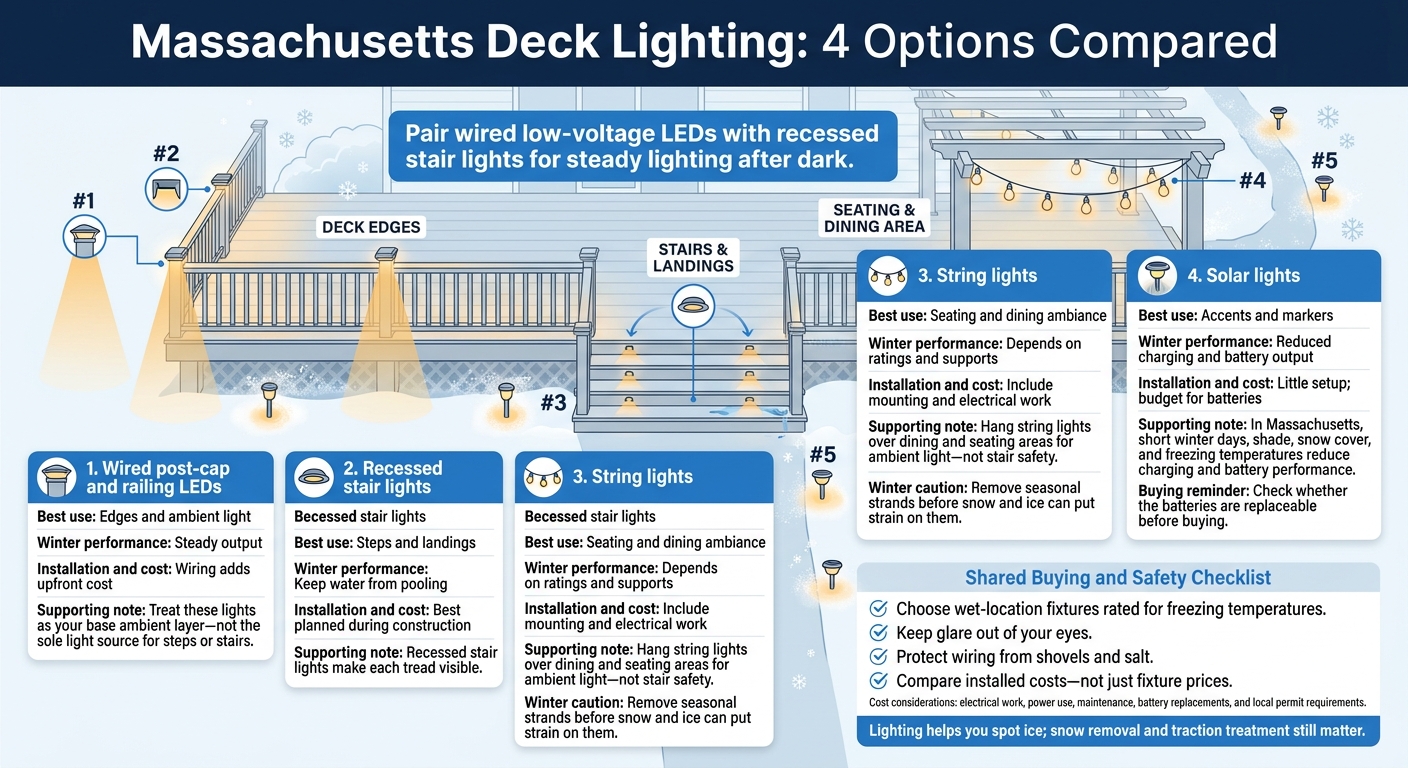
Massachusetts Deck Lighting: 4 Options Compared
LED post-cap and railing lights form a low-glare border around the deck, provide light for dining, and help people see at night. Position fixtures to illuminate steps, rail lines, and seating areas without shining into guests’ eyes.
Treat these lights as your base ambient layer - not the sole light source for steps or stairs.
Choose wet-location-rated fixtures. Route wiring away from snow and ice buildup, shovels, snow blowers, and ice-melt salt. Even well-protected fixtures should work alongside step lighting.
Low-voltage systems usually cost more to install than solar lights. In return, they provide steadier light, perform better in winter, and cost less in replacements.
Stair and tread lights add another layer of visibility for safer footing.
Post-cap and railing lights define the deck edge. Recessed stair lights make each tread visible, placing light where you need secure footing. They’re the best choice when every step needs to be easy to see, but they shouldn’t serve as the deck’s main ambient lighting.
Pair stair lights with proper grading to keep runoff from pooling and freezing at the landing. Lighting helps you see, but it doesn’t make ice safe. You’ll still need snow removal and traction treatment.
Plan recessed stair lights during stair construction for a cleaner finish and hidden wiring. This applies to stone or masonry stairs, too.
Hang string lights over dining and seating areas for ambient light - not stair safety. Check the layout after dark for glare and harsh shadows.
Choose strands, connections, and supports rated for wet conditions and freezing temperatures. Remove seasonal strands before snow and ice can put strain on them.
Get a quote that includes mounting and any electrical work. This lets you compare the full installed cost with the limited task lighting string lights provide.
String lights add atmosphere rather than light for safe footing. The next option addresses lighting differently, with less reliance on overhead wiring.
Solar lights are the easiest to install where wiring is limited. The trade-off? They're also the least dependable option for winter output.
Use solar fixtures for accents and perimeter markers - not for stairs or primary dining lighting. Their brightness depends on sun exposure. Wired low-voltage LEDs provide more consistent light and give you more control.
In Massachusetts, short winter days, shade, snow cover, and freezing temperatures reduce charging and battery performance. Wet-location and temperature ratings help you choose fixtures suited to these conditions, but they don't fix winter charging limits.
Solar post-cap and pathway lights are easy to install and cost almost nothing in electricity. But battery replacements add to their lifetime cost. Check whether the batteries are replaceable before buying. Wired LEDs require more installation work, but provide steadier visibility year-round.
Massachusetts winters put deck lighting to the test. Choose wet-location fixtures built for snow, ice, and freeze-thaw cycles. Wired low-voltage lighting provides the most consistent winter output, helping you see steps, railing edges, and outdoor dining areas.
| Lighting option | Winter takeaway |
|---|---|
| Low-voltage LED post-cap and railing lights | Steady, year-round output |
| Recessed stair and tread lights | Plan drainage so water doesn’t collect around fixtures |
| Outdoor string lights and solar fixtures | Least dependable in winter |
Plan for drainage and winter cleanup. Give water a path away from fixtures so it doesn’t pool and freeze. After snow and ice, clear the fixtures, check the wiring, and keep steps treated for traction. These winter demands also affect installation and maintenance costs.
After brightness and winter durability, consider the total installed cost. Compare installed cost, not just fixture price. Plan wiring, fixture placement, and drainage before construction, especially for built-in deck and stair lights. Adding them later can mean higher labor costs.
Low-voltage lighting costs more upfront than solar, but it provides steadier light, less upkeep, and better winter performance. Solar saves on wiring but comes with battery replacement costs. String lights may also need mounting and electrical work.
Massachusetts weather affects long-term costs and performance. Durable fixtures, proper grading, and drainage help protect wiring and housings through freeze-thaw cycles and reduce repair costs. Before construction begins, check permit and electrical inspection requirements under Massachusetts rules, and budget for any related costs.
A layered lighting plan lets you weigh these trade-offs by function, combining fixture types rather than relying on one type throughout.
Give each fixture type a clear job. Use low-voltage lighting for dependable, year-round visibility: post-cap and railing lights mark deck edges, while recessed stair lights keep footing safe. Build stair lighting into hardscape steps during construction for a cleaner finish and protected wiring. Reserve solar lights for accents where wiring isn’t practical.
Use warm, soft ambient light around seating, with brighter directed light on steps, landings, and dining surfaces. Keep glare out of guests’ eyes so they can enjoy the deck after dark.
Check wet-location and temperature ratings before buying. The same freeze-thaw exposure that drives Massachusetts deck material decisions applies to fixture and mounting hardware selection. Place fixtures away from areas used for snow removal and salting.
Oliver Enterprises plans landscape lighting installation in North Andover with fixture placement, wiring, and freeze-thaw performance confirmed before the build starts. A site-specific estimate keeps brightness, glare control, and zone-by-zone durability decisions tied to the actual deck layout.
Deck lights should balance safety, security, and ambiance. Light stairs and changes between surfaces clearly so people can move around safely. Keep the space comfortable and inviting for evening meals and relaxation.
The right brightness depends on your deck’s layout and how you use it. Plan your fixtures and their placement early to highlight the deck’s features without creating glare.
You can add stair lights to an existing deck, but the work can be disruptive and expensive. Installing lights during construction saves time and money because you can run wiring without disturbing finished surfaces.
If you add lights later, budget for the extra labor to run wiring and fit fixtures into your existing deck.
In Massachusetts, wired deck lighting may require a permit, just like other outdoor electrical work. If you’re installing only low-voltage lighting during deck construction, the permit rules depend on how your town treats the wiring and whether it counts the work as part of the deck or structure.
Check with your local building department before you start.