Compare five eco-friendly pergola materials for Zone 6b, focusing on moisture resistance, winter durability, upkeep, and life-cycle cost.
If you want an eco-friendly pergola in Merrimack Valley, the safest picks are usually reclaimed wood, recycled metal, composite lumber with recycled content, and certified natural wood, while bamboo needs more care in wet, cold weather.
Your best choice comes down to winter durability, moisture resistance, upkeep, and cost over time. In Zone 6b, freeze-thaw cycles, humidity, and snow loads can shorten the life of weaker materials, so low-impact sourcing alone is not enough.
Here’s the short answer:
A few facts stand out:
Quick Comparison
| Material | Low-Impact Angle | Zone 6b Fit | Upkeep | Cost | Best For |
|---|---|---|---|---|---|
| Bamboo | Fast regrowth | Fair with treatment | Moderate | Moderate | Natural, modern yards |
| Reclaimed Wood | Reuses existing timber | Strong | Moderate | Moderate to high | Rustic or older homes |
| Recycled Metal | Recyclable at end of life | Strong | Low | High | Modern builds, snowy sites |
| Composite Lumber | Uses recycled wood/plastic | Strong | Very low | Moderate | Damp areas, low-care setups |
| Certified Natural Wood | FSC/PEFC sourcing | Good with dense species | Moderate to high | Lower to moderate | Warm wood look |
This guide breaks down where each material fits best, what trade-offs come with it, and which option makes the most sense for your yard, budget, and weather exposure.
The term "eco-friendly" gets tossed around a lot in construction. But when you're comparing pergola materials, it helps to slow down and look at what that label should mean.
A pergola material should check as many of these boxes as it can.
Renewable sourcing is one of the first things to look at. That includes fast-growing materials like bamboo and wood from well-managed forests. Recycled content matters too. Reclaimed wood and recycled metal help keep waste out of landfills and cut the need for new raw materials.
Embodied energy is another big piece of the puzzle. It refers to the total energy used to source, move, and make a material. Reclaimed lumber often comes out ahead here because it skips steps like harvesting and kiln-drying. If you're building an outdoor structure that may stand for decades, starting with a lower-energy material can shrink its footprint over time.
Durability matters just as much as sourcing. A material that breaks down early in Merrimack Valley weather creates more waste and more replacement work. That’s a bigger deal in Zone 6b, where freeze-thaw cycles and snow can wear out weaker materials faster. Maintenance plays into this too. If a pergola needs frequent chemical treatments or constant repairs to hold up, its footprint gets bigger year after year.
Then there’s end-of-life recyclability. The best options don’t just perform well on day one. They can also be reused, turned into new products, or returned safely to the earth when the structure finally comes down.
Use these filters to compare the five materials below.
Bamboo is a fast-growing renewable material that can work well for load-bearing pergola frames. In a 2026 sustainability assessment, it scored 0.68/1.0 in the structural frame category.
The catch is simple: moisture. In Merrimack Valley, wet weather and freeze-thaw cycles can be hard on bamboo. If you use it here, it needs sealing and treatment for moisture and freeze-thaw exposure so it holds up over time.
| Factor | Bamboo at a Glance |
|---|---|
| Sustainability Score | 0.68 / 1.0 (structural frame category) |
| Assessment Horizon | 50-year simulation |
| Local Fit | Good with proper moisture treatment |
| Upkeep | Requires sealing and treatment for local moisture conditions |
| Best Use | Natural landscape design |
| Cost | Life-cycle costs can be competitive when waste and recyclability matter |
If bamboo feels a bit too moisture-sensitive for your site, reclaimed wood is a tougher low-waste option.
Reclaimed wood comes from old barns, bridges, boats, and sawmills. In plain terms, it's timber that gets a second life instead of being thrown out.
That makes it a solid low-waste option. It reuses wood that already exists, lowers demand for virgin lumber, and takes much less energy to process than new wood. In fact, making new softwood framing lumber uses 15 times more fossil and biomass energy than reclaiming the same amount of wood. That edge matters even more when the material also performs well in Zone 6b weather.
Compared with bamboo, reclaimed wood is often a better fit here. Bamboo grows back fast, but it can be sensitive to moisture. Reclaimed wood, by contrast, is low-waste and tends to be more stable in this climate. In Zone 6b, dense reclaimed hardwoods and old-growth softwoods usually deal with humidity and freeze-thaw cycles better than many new-growth woods. The reason is simple: slow growth creates tighter rings, which can help the wood resist rot, warping, and splintering. That's useful in the Merrimack Valley, where summers get humid and winters can be rough.
There is some prep work, though. Before installation, reclaimed wood needs to be de-nailed, re-dried, and treated for pests and mold. After that, it still needs the same kind of care you'd expect from other natural wood structures. If you're shopping around, look for FSC Recycled, PEFC, or SCS Salvaged Wood & Fiber Standard certification.
On the style side, reclaimed wood has range. It fits rustic spaces, but it can also work well in modern industrial designs.
| Factor | Reclaimed Wood at a Glance |
|---|---|
| Sustainability Strength | Diverts waste and uses far less energy than new lumber |
| Local Climate Fit | Strong for Zone 6b humidity and freeze-thaw cycles |
| Best Wood Type | Dense reclaimed hardwoods or old-growth softwoods |
| Upkeep | Requires de-nailing, re-drying, and pest/mold treatment before installation |
| Design Styles | Rustic to modern industrial |
| Certifications to Seek | FSC Recycled, PEFC, SCS Salvaged Wood & Fiber Standard |
If character and low waste matter most, reclaimed wood is a strong pick. If you want a cleaner, more industrial look with even less upkeep, recycled metal is next.
For homeowners who want a lower-waste material with a sharper, more modern look, recycled metal is the next option.
Recycled metal keeps scrap out of landfills and can be reprocessed at the end of its life, which makes it a strong fit for circular-economy goals. Standard structural steel can come with a higher manufacturing footprint, so recycled content matters.
In Zone 6b, performance comes down to fabrication and finish. When it's fabricated and installed the right way, recycled metal can handle Merrimack Valley's freeze-thaw cycles and winter snow loads. Metal pergolas also fit modern outdoor spaces well and give the structure a clean, architectural look.
| Factor | Recycled Metal at a Glance |
|---|---|
| Sustainability Strength | Strong end-of-life recyclability; supports circular-economy principles |
| Environmental Tradeoff | Standard structural steel can carry a higher manufacturing footprint, so recycled content matters |
| Local Climate Fit | Properly fabricated and installed, it can handle Merrimack Valley seasonal stressors |
| Design Style | Sleek, modern look |
| Budget | Higher upfront cost than some natural alternatives |
For homeowners set on a contemporary style, recycled metal is a strong pick. A corrosion-resistant finish helps, and regular joint checks can extend service life.
If you want a pergola that looks like wood but doesn't ask for much upkeep, composite lumber is a solid next step for your hardscaping project.
Composite lumber mixes recycled wood and plastic, which helps keep waste out of landfills. That matters because decomposing wood can release methane. Using recycled wood also keeps stored carbon in circulation and cuts demand for virgin timber.
In Zone 6b, composite lumber handles moisture well and stands up to rot, warping, and splintering. That makes it a good fit for Zone 6b pergolas.
| Factor | Composite Lumber at a Glance |
|---|---|
| Sustainability Strength | Diverts wood and plastic waste; extends carbon storage |
| Environmental Tradeoff | Limited recyclability at end of life compared with natural materials |
| Local Climate Fit | Performs well in Zone 6b; resists moisture, rot, warping, and splintering |
| Maintenance | Low |
| Design Style | Versatile; available in finishes that mimic natural wood |
| Budget | Higher upfront cost; lower maintenance over time |
The upfront price is usually higher, but you may make some of that back through lower maintenance over time. If you're comparing products, look for the FSC Recycled label. It verifies 100% post-consumer reclaimed content, which can help you check recycled-content claims.
For a wood-look pergola with low upkeep, composite lumber is a strong option.
If you want real wood and still want to make a better choice, the source is what matters most. With natural wood, sustainability comes down to where it came from. Look for FSC- or PEFC-certified lumber from responsibly managed forests.
Dense, mature hardwoods also tend to hold up better over time. They resist rot, splitting, and warping better than softer options. For Zone 6b pergolas, that matters a lot. Freeze-thaw cycles and humid summers can be hard on wood, and new-growth softwoods usually break down faster in those conditions.
Where the wood comes from matters in another way too. Domestic hardwoods often come with a lower transportation footprint than imported tropical woods. So you’re weighing two things at once: sourcing and how long the material will last.
| Factor | Sustainably Sourced Natural Wood |
|---|---|
| Sustainability Strength | FSC/PEFC-certified; harvested from responsibly managed forests |
| Main Tradeoff | Harvesting still affects forests, so source matters. |
| Local Climate Fit | Dense hardwoods handle Merrimack Valley weather better than new-growth softwoods |
| Maintenance | Moderate; periodic sealing or staining helps preserve appearance |
| Design Style | Warm, natural look that blends well with the surrounding landscape |
Sustainably sourced natural wood works well for a pergola that feels warm, timeless, and tied to the landscape.
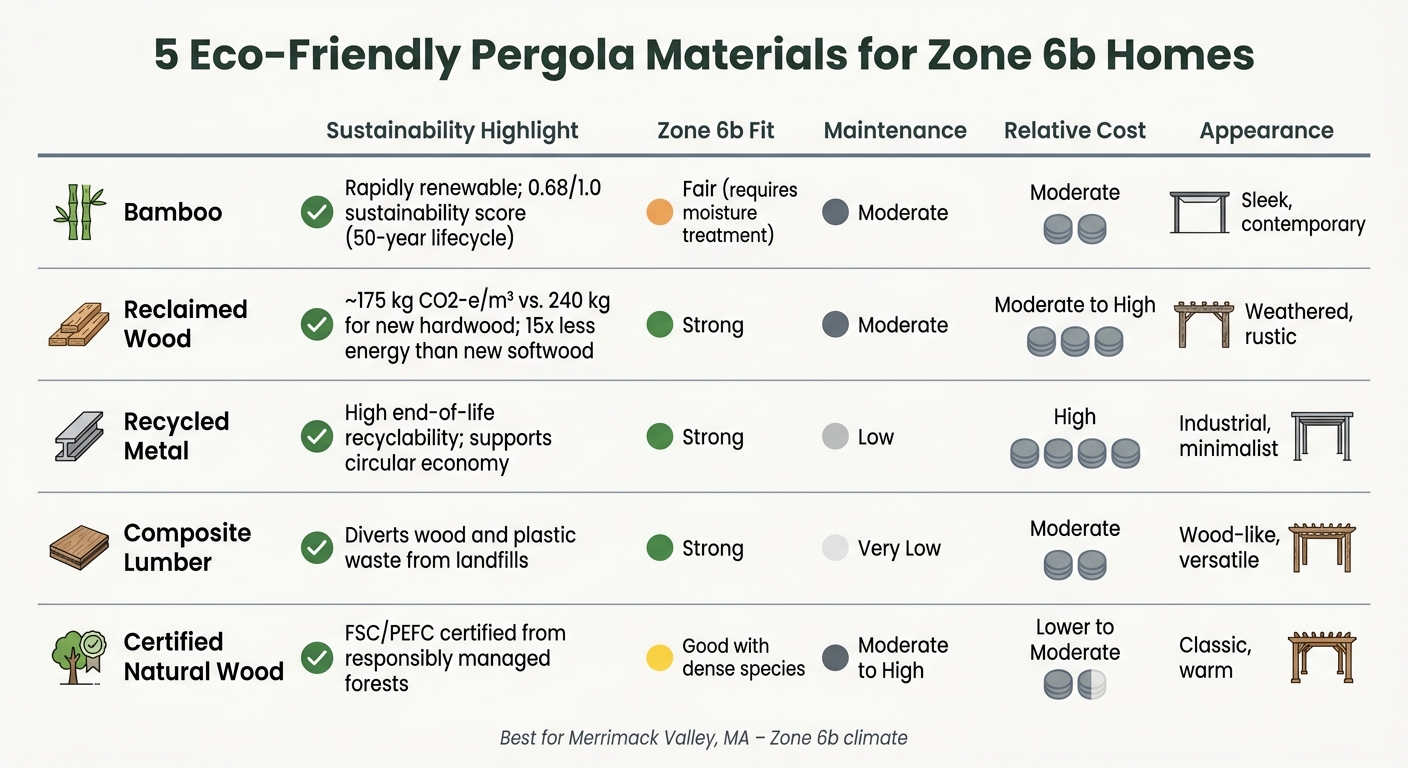
5 Eco-Friendly Pergola Materials Compared for Zone 6b
These five materials each make a different tradeoff between maintenance, price, and cold-weather performance in Zone 6b.
Use this quick snapshot to line up your material choice with your budget, how much upkeep you can handle, and how much winter exposure the structure will face.
| Material | Sustainability Highlight | Best Local Use Case | Maintenance Level | Relative Cost | Appearance |
|---|---|---|---|---|---|
| Bamboo | Rapidly renewable; sustainability score of 0.68 in a 50-year lifecycle assessment | Modern, eco-conscious designs | Moderate (requires UV protection and sealing) | Moderate | Sleek, contemporary |
| Reclaimed Wood | Extends carbon storage; ~175 kg CO2-e/m³ footprint vs. 240 kg for new hardwood | Rustic or historic homes; high-durability needs | Moderate (periodic sealing) | Moderate to Higher | Weathered, rustic |
| Recycled Metal | High recyclability; low waste | Heavy-snow sites; low-maintenance spaces | Low | Higher | Industrial, minimalist |
| Composite Lumber | Diverts plastic and wood waste from landfills | Poolside, damp areas, high-humidity spots | Very Low | Moderate | Wood-like, versatile |
| Sustainably Sourced Natural Wood | FSC/PEFC certified from responsibly managed forests | Traditional New England garden structures | Moderate to High | Lower to Moderate | Classic, warm |
The biggest differences come down to three things: upkeep, upfront price, and weather resistance.
If you want the least hands-on care, recycled metal and composite lumber are the easiest to live with. If your main concern is rough winter conditions, reclaimed wood stands out for durability. Price also helps separate the field. Recycled metal and reclaimed wood usually land on the higher end, composite tends to sit in the middle, and natural wood can swing based on species and local supply.
Once you’ve picked the material, the next job is engineering the structure for the site. Footings, hardware, drainage, and tie-ins have a big impact on how the pergola holds up over time. When those details are done right, you’re less likely to deal with repairs or early replacement later on. That matters for the long-term environmental footprint of any material.
Span limits and beam sizes change based on the material, so post spacing and beam dimensions should be engineered around the site’s snow, wind, and vine loads. Structural bamboo works well in frames, and reclaimed old-growth wood handles structural loads very well. In plain terms: size posts and beams for the site’s snow, wind, and vine loads.
Hardware is another detail people often miss. Use fasteners and connectors rated for dense bamboo or reclaimed hardwood.
In North Andover and the Merrimack Valley, pergolas need proper footings and drainage to deal with freeze-thaw movement. This is where the small stuff becomes a big deal, especially when the pergola ties into patios, walls, or outdoor kitchens.
For complex sites, review material selection and structure layout at the same time. Oliver Enterprises can review material choices and structural details during site planning in North Andover.
The best eco-friendly pergola pick comes down to your property, your weather exposure, and how much upkeep you're willing to take on.
In Zone 6b, focus on materials that balance lower impact with solid moisture resistance and winter performance. Life-cycle cost matters more than the upfront price tag. A cheaper material can cost more over time if it needs extra maintenance or early replacement.
Match the material to the site. Sun exposure, drainage, tree cover, and how the pergola ties into existing hardscaping all affect how long the structure holds up with minimal intervention. Oliver Enterprises factors those site conditions into material recommendations on Merrimack Valley properties, starting with what the yard is actually doing before settling on a structural approach.
That kind of planning tends to extend the structure's life and reduce the work it asks for over time.
In USDA Zone 6b, a pergola’s lifespan depends a lot on its foundation and drainage. Freeze-thaw cycles can be tough on outdoor structures, and small problems at the base can turn into bigger ones over time.
Among lower-impact material options, reclaimed old-growth wood stands out for durability. Its tightly packed growth rings help it resist rot, splintering, and warping better than new-growth timber.
Recycled metal is usually the lowest-maintenance eco-friendly pergola material. It holds up well over time and resists rot, insects, and warping.
Unlike wood or bamboo, which may need sealing or other treatment from time to time, recycled metal gives you a long-lasting option with very little upkeep.
Start with your priorities. Reclaimed wood is often the greener pick because it keeps wood out of the waste stream, lowers demand for newly cut trees, and may need less energy to prepare.
Composite is often the go-to for convenience and steady performance. That said, reclaimed wood isn’t automatically the better option in every case. Its impact still depends on where it came from, how far it traveled, and what shape the wood is in.